
Service
Garage Door Roller Replacement in Lenexa
Worn rollers on 1980s-era Lenexa garage doors bind, jump track, and grind through cold Kansas winters. See what causes it and which rollers we carry.
- Licensed & Insured
- Same-Area Service Calls
- Upfront Pricing
What Happens When You Call
-
1
Call or Request a Quote
Tell us what the door is doing and roughly how old the house is - that alone points us toward the likely part before a truck leaves.
-
2
On-Site Diagnosis
A tech checks the spring, cables, tracks, and opener in person and tells you plainly what is actually wrong.
-
3
Straight Price, No Surprises
You get a number before any work starts. It covers parts and labor, nothing added after the fact.
-
4
Fixed the Same Visit
Most repairs are done in one trip. If a part needs sourcing, we tell you that upfront instead of guessing.
What It Costs
We're not going to throw a number at you that doesn't match your door. A roller job depends on how many rollers have failed, whether the track needs straightening too, and which roller type your door was built for.
A single cracked roller on an otherwise sound door is a quick swap. A full set replacement on a door that's been grinding for months, where the track has worn grooves to match the bad rollers, takes longer and costs more because we're fixing two problems instead of one.
What we can tell you without seeing the door: steel rollers cost less up front and need more attention over the years. Nylon rollers with sealed bearings cost more per roller but run quieter and hold up better through the freeze-thaw cycle this area gets every winter. If you want an actual number, that comes from a look at the door, not a guess over the phone.
One honest limit here - if your rollers are shot because the track is bent or the opener has been fighting a bad balance for a long time, replacing rollers alone won't fix the noise. We'll tell you that up front instead of selling you a part that won't solve it.
What Causes It Around Here
Most of the garage doors we work on across this service area went up somewhere between 1950 and 2004, with the bulk of that stock built in the 1980s and 90s across the nineteen communities we cover. That matters for rollers specifically: doors from that era were built with steel rollers running in steel track, a combination that's cheap and reliable when new but wears fast once the factory grease dries out, which it does after fifteen to twenty years no matter how well the door was maintained otherwise.
The other piece is the climate. This is a cold-moderate band, meaning garages here see real freeze-thaw swings every winter rather than one long cold stretch.
That cycle contracts and expands the steel track and the roller stems inside it, and it's harder on old grease and old bearings than steady cold ever would be. A roller that would coast along for another five years in a milder climate starts chipping, flat-spotting, or seizing here because it's going through that expansion cycle dozens of times a season.
Put those two things together - 1980s steel-roller hardware plus a freeze-thaw winter pattern - and roller wear is one of the most common calls we get that isn't a spring or an opener.
What You Are Seeing
A door with bad rollers usually announces itself before it fails outright. Listen for a grinding or scraping sound as the door travels, especially near the top or bottom of the track where a worn roller catches instead of rolling smooth. Look at the track itself - if you see shiny wear grooves or small metal shavings collecting at the bottom bracket, that's roller material being ground off with every open and close.
A door that jumps or shudders partway through its travel, rather than gliding the whole way, is often a roller that's gone slightly oval or has a flat spot from sitting in one position too long. If one side of the door seems to hang up while the other side moves fine, check whether the rollers on that side are cracked or missing their stem cap - a roller can look intact from a few feet away and still be one bad flex from popping out of the track.
The one we'd flag as urgent: a roller stem that's visibly bent or a roller hanging loose in the track. That door can jump the track entirely on the next cycle, and at that point you're not looking at a roller job anymore - you're looking at a bent track and possibly a damaged panel.
Parts We Carry
We stock both steel and nylon rollers to match what's already on the door or to upgrade it. Steel rollers are what most of the 1980s and 90s stock in this area came with originally - they're the direct swap if you want to keep costs down and aren't bothered by the noise level they run at.
Nylon rollers with sealed ball bearings are the upgrade most homeowners ask for once they've lived with a grinding steel roller for a few winters. They run quieter, don't need periodic lubrication the way steel does, and hold up better through repeated freeze-thaw cycles because the bearing is sealed against moisture rather than exposed like an open steel roller.
We carry standard 7-ball and 10-ball stem lengths to fit the track spacing on most doors from this housing era. If your door has a nonstandard track or a roller size we don't have on the truck, we'll tell you that rather than force a part that doesn't fit - a roller that's slightly wrong for the track will bind again within a season, and that's a callback nobody wants.
Talk to a Technician Before You Book
Describe what the door is doing and get a straight answer on what it likely needs.
Jobs Like Yours
Recent work from this service line.
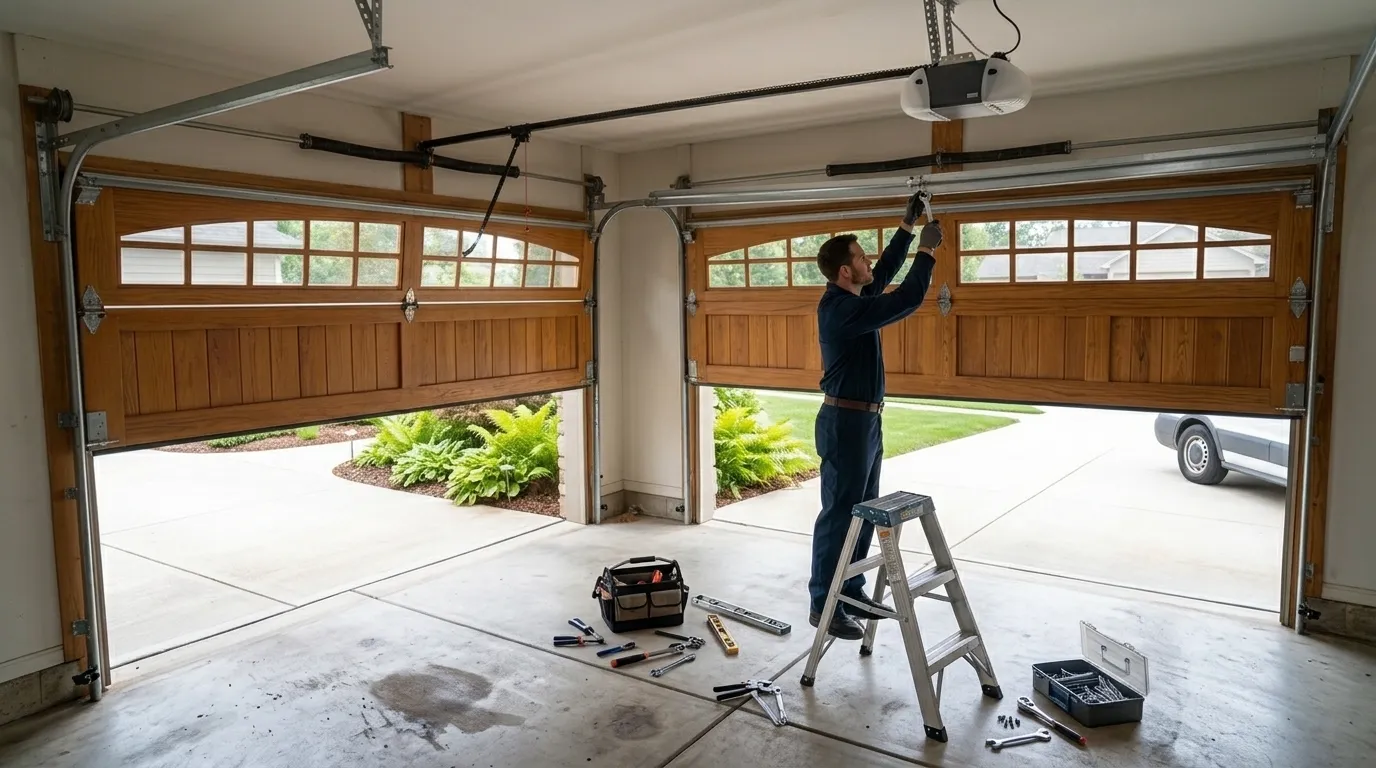

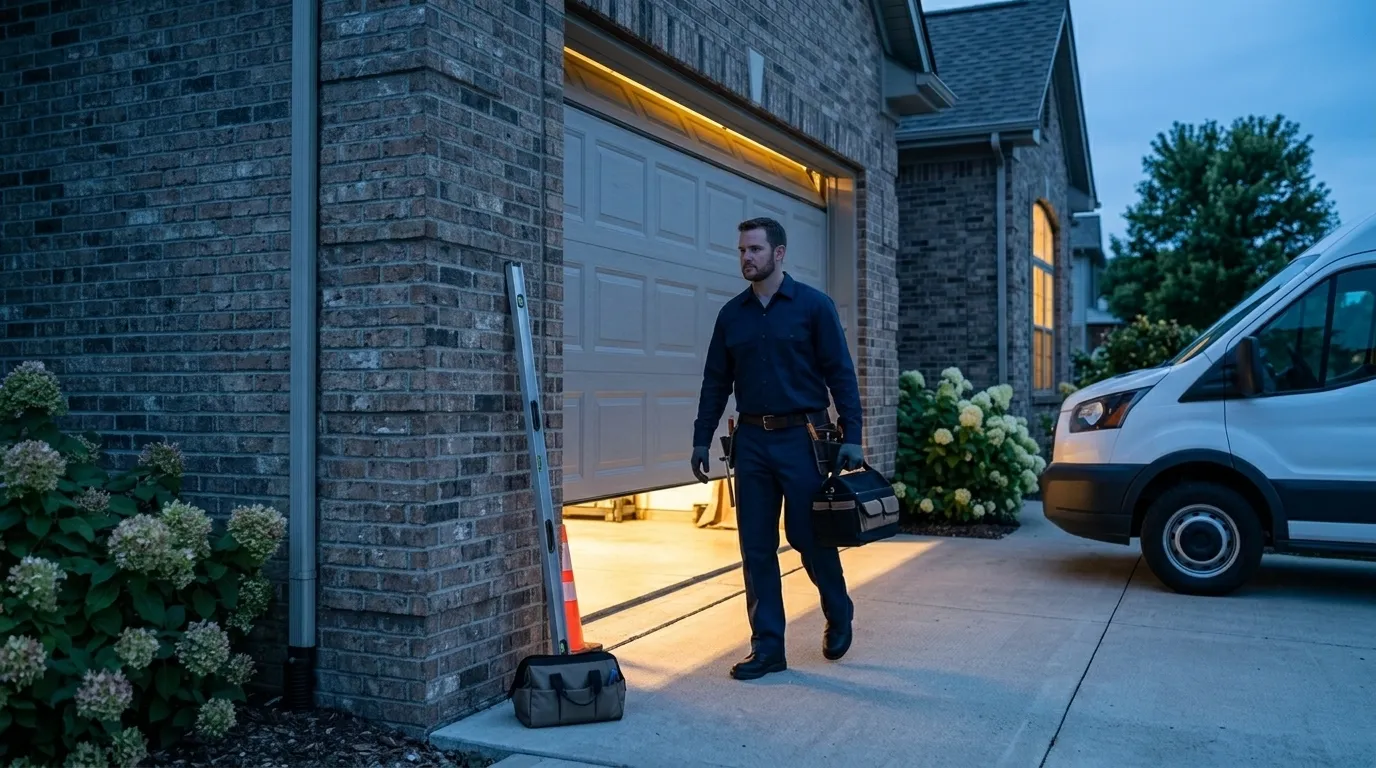
Why Lenexa Calls Us
Frequently Asked Questions
How many rollers usually need replacing at once?
If one roller has failed from age, the others on that door are usually close behind, since they went in at the same time and have seen the same freeze-thaw cycles. Most jobs on doors from the 1980s and 90s stock common here end up as a full set rather than a single roller, though we'll only replace what's actually worn.
Can I just lubricate noisy rollers instead of replacing them?
Lubrication helps if the roller is still round and the bearing isn't shot - it can buy time on a door that's starting to get noisy. It won't fix a roller that's flat-spotted, cracked, or missing its stem cap, and it won't undo wear grooves already cut into the track.
Do nylon rollers really make a difference in cold weather?
Yes. Sealed nylon rollers don't rely on grease the way open steel rollers do, so they don't stiffen up as much when temperatures swing through a freeze-thaw cycle. Steel rollers are cheaper but need more attention through the winter months in this area.
Need Garage Door Roller Replacement in Lenexa?
Call now for straight answers on cost and timing.