
Maintenance & Tune-Up in Roeland Park
Garage Door Maintenance for Roeland Park's Older Housing Stock
Roeland Park homes date to around 1950, older than most of the service area. See what maintenance actually costs here, and when replacement beats another repair.
- Licensed & Insured
- Same-Area Service Calls
- Upfront Pricing
What Happens When You Call
-
1
Call or Request a Quote
Tell us what the door is doing and roughly how old the house is - that alone points us toward the likely part before a truck leaves.
-
2
On-Site Diagnosis
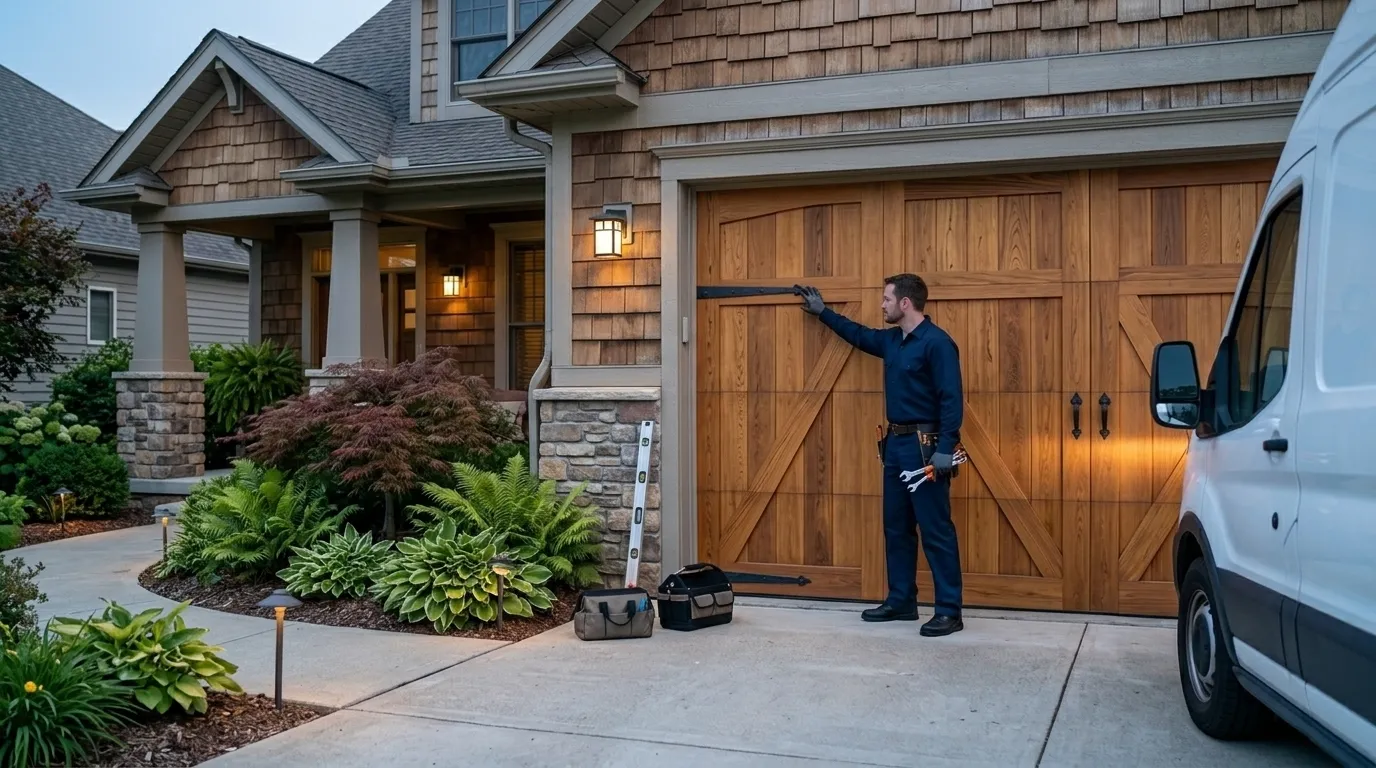
A tech checks the spring, cables, tracks, and opener in person and tells you plainly what is actually wrong.
-
3
Straight Price, No Surprises
You get a number before any work starts. It covers parts and labor, nothing added after the fact.
-
4
Fixed the Same Visit
Most repairs are done in one trip. If a part needs sourcing, we tell you that upfront instead of guessing.
What the Repair Takes
Roeland Park's median household income sits at $89,385, a bit below the $96,725 median across the wider service area we cover out of Lenexa. That gap matters when a spring breaks or an opener quits, because it changes where the repair-or-replace line sits. On a $89,385 household budget, a $250-$400 spring or roller job is a maintenance expense you absorb.
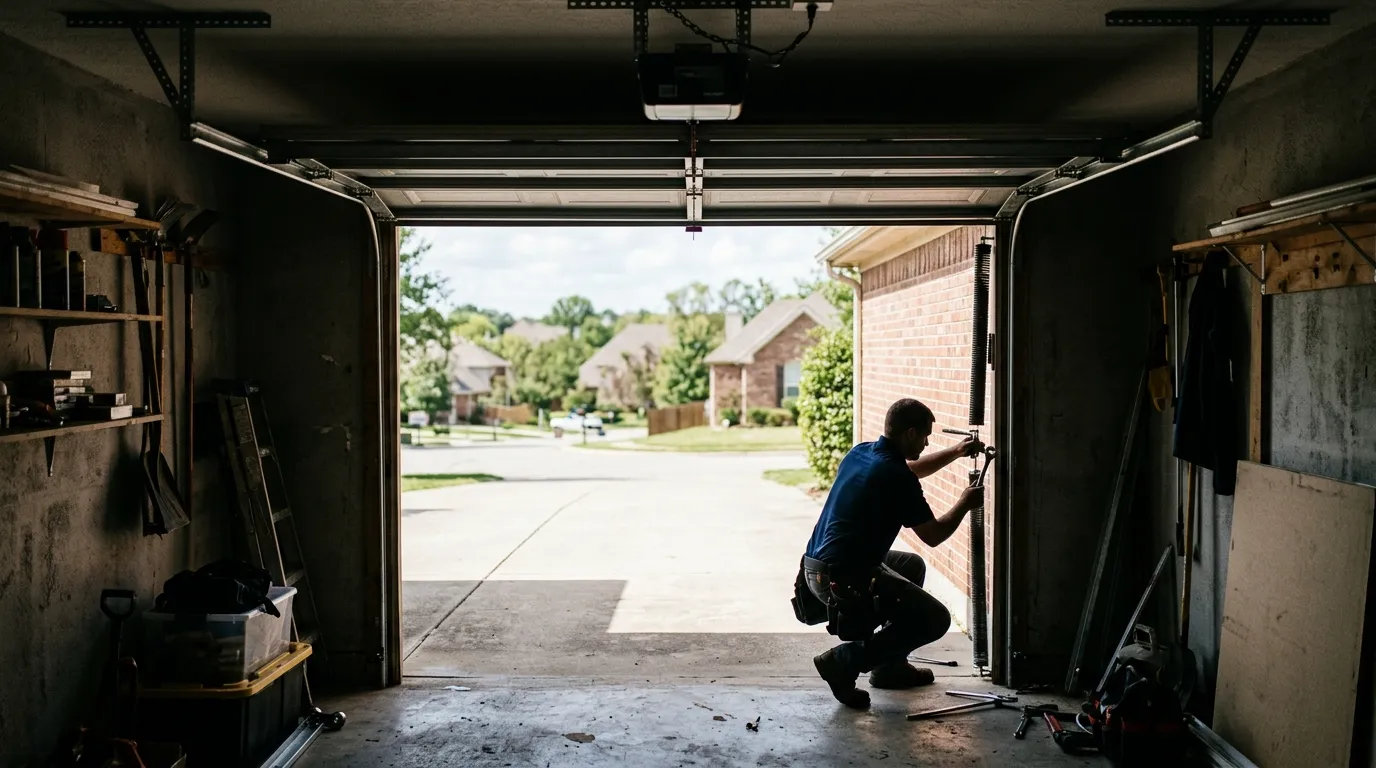
A $1,800 full-door replacement is a decision you sit with for a week. We tell people straight when a tune-up buys another five years versus when it's a stopgap on a door that's done. Most maintenance calls here are the basics: lubricating hinges and rollers, checking cable wear, resetting spring tension, tightening the track bolts that walk loose over a few thousand open-close cycles.
None of that is exotic work. What changes town to town is the age of what we're working on, and that's where Roeland Park is different from a lot of the newer subdivisions we drive to. We come out from Lenexa, about 10 miles away, and the trip itself doesn't change the price - the door in front of us does.
The Complications
The median year built here is 1950, which puts a real share of Roeland Park houses well ahead of the 1980 median that describes the broader service area. Housing built across that area generally runs 1950 to 2004, with most of it dating to the 1980s and 90s. Roeland Park sits at the older end of that range, not the middle of it.
That means more original openings sized for doors nobody makes in that exact width anymore, more side-mounted torsion hardware instead of the center-mount setups common on 90s-built garages, and more panel sections that have been repainted or patched rather than replaced outright. A tune-up on a 1950s door isn't the same job as a tune-up on a 1995 door. The track alignment tolerances are tighter, the header clearance is often shorter, and the hardware brackets were sized for lighter doors than the insulated steel panels people install today.
We check for that mismatch before we quote anything, because retrofitting new opener hardware onto an old frame is where jobs go sideways if it's rushed.
Parts We Carry
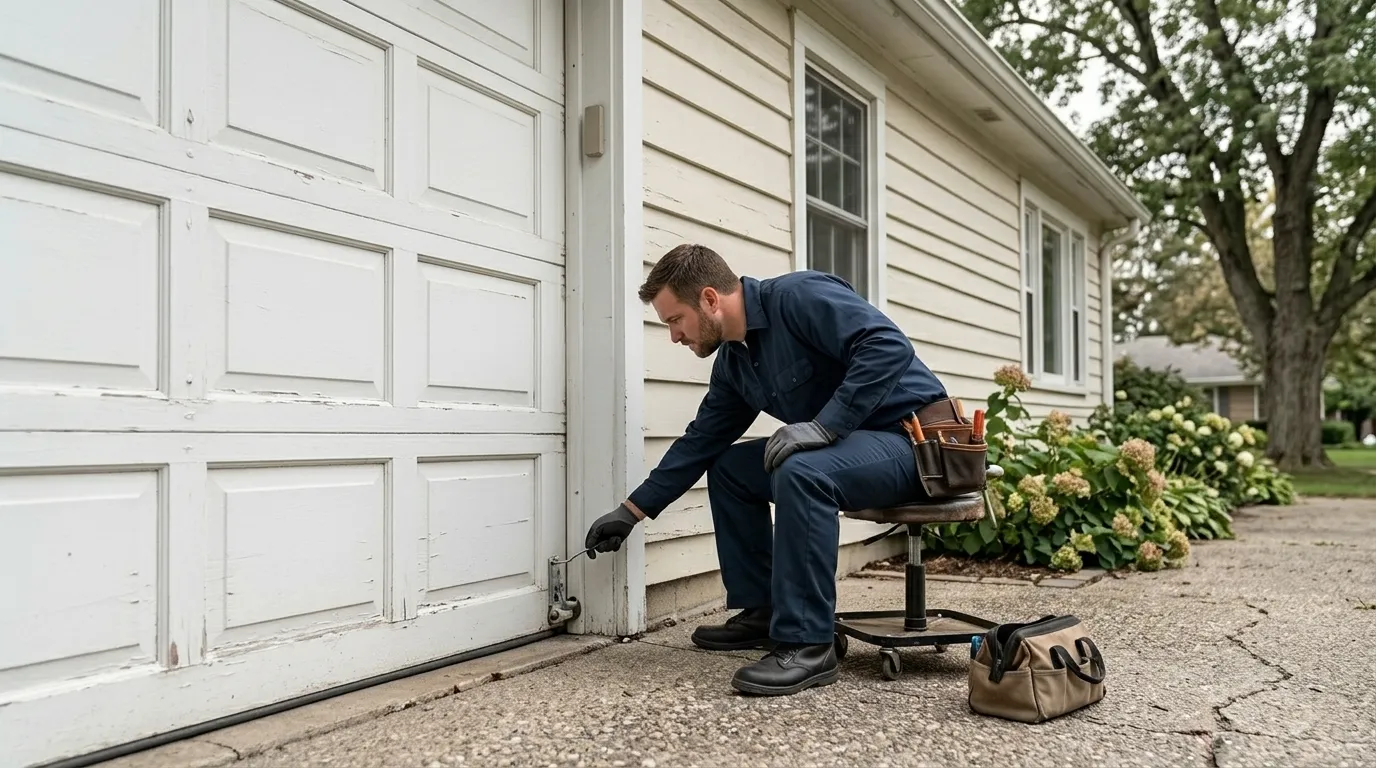
We stock the rollers, cables, hinges, and standard torsion springs that cover most maintenance calls without a special order. Given the climate band here - cold with moderate swings - we check weatherstripping and bottom seals on every visit, since seal failure shows up faster in houses that see real winter temperature drops than in a mild climate. What we don't always carry on the truck is the exact spring wire size or drum for some of the older 1950s-era doors, since manufacturers stopped making a few of those specs years back.
When that happens, we tell you at the estimate, not after we've opened up the header. It's a short delay, not a dead end, but it's worth knowing up front rather than assuming every part on an older door is on the shelf.
The DIY Question
Lubricating hinges, rollers, and the track with the right garage-door-specific grease is fine to do yourself, and it's the single best thing an owner can do between professional visits. Tightening loose bolts on the track brackets, with the door down and the opener unplugged, is also reasonable. Torsion springs are not.
A door built to a 1950 opening, on original or near-original hardware, can carry tension that behaves differently than a spring on a newer standardized door, and that's not a place to learn on the job. If your door is slow to open, unusually loud, or the opener strains and reverses, that's a sign the balance is off - stop using it and get someone to look at the spring and cable setup before it fails the rest of the way.
Talk to a Roeland Park Technician First
Describe what the door is doing and get a straight answer on what it likely needs.
Other Garage Door Services in Roeland Park
Recent Work in Roeland Park
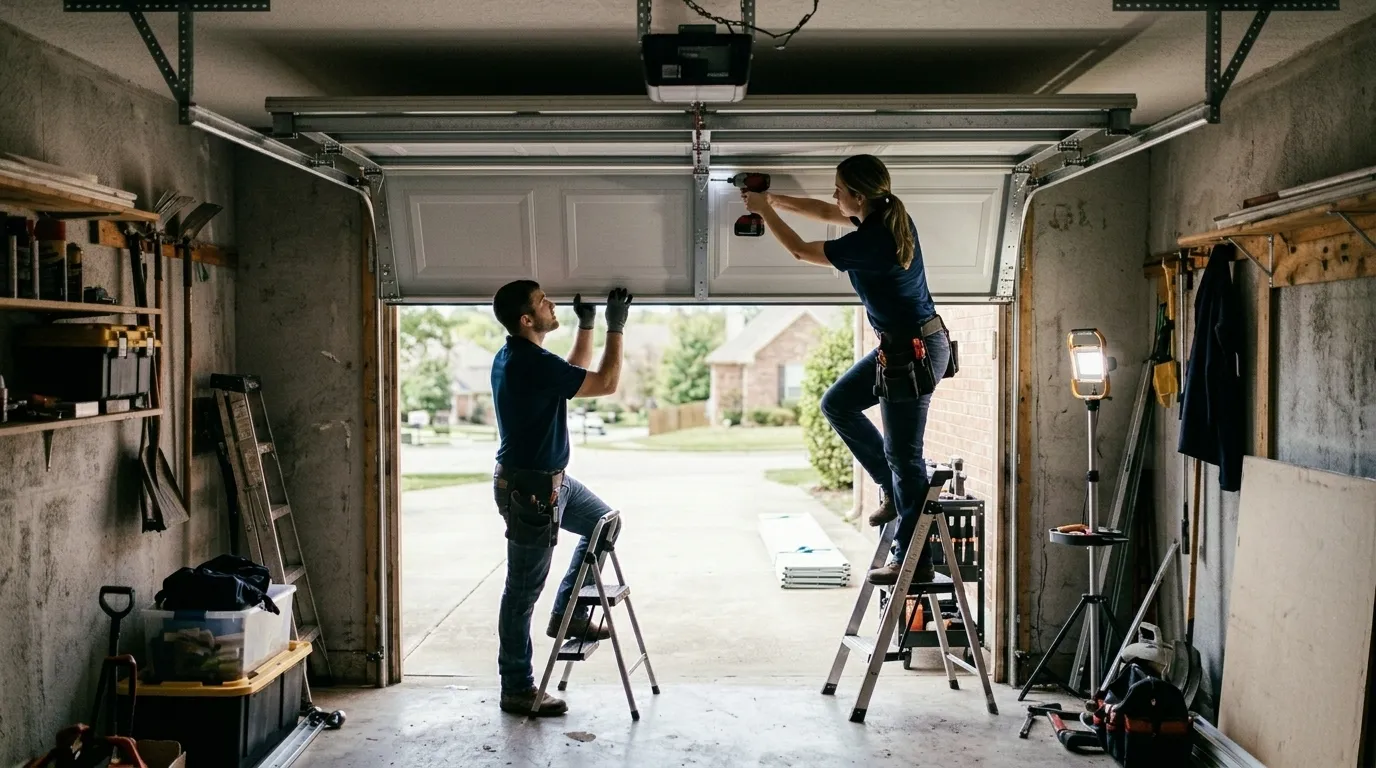
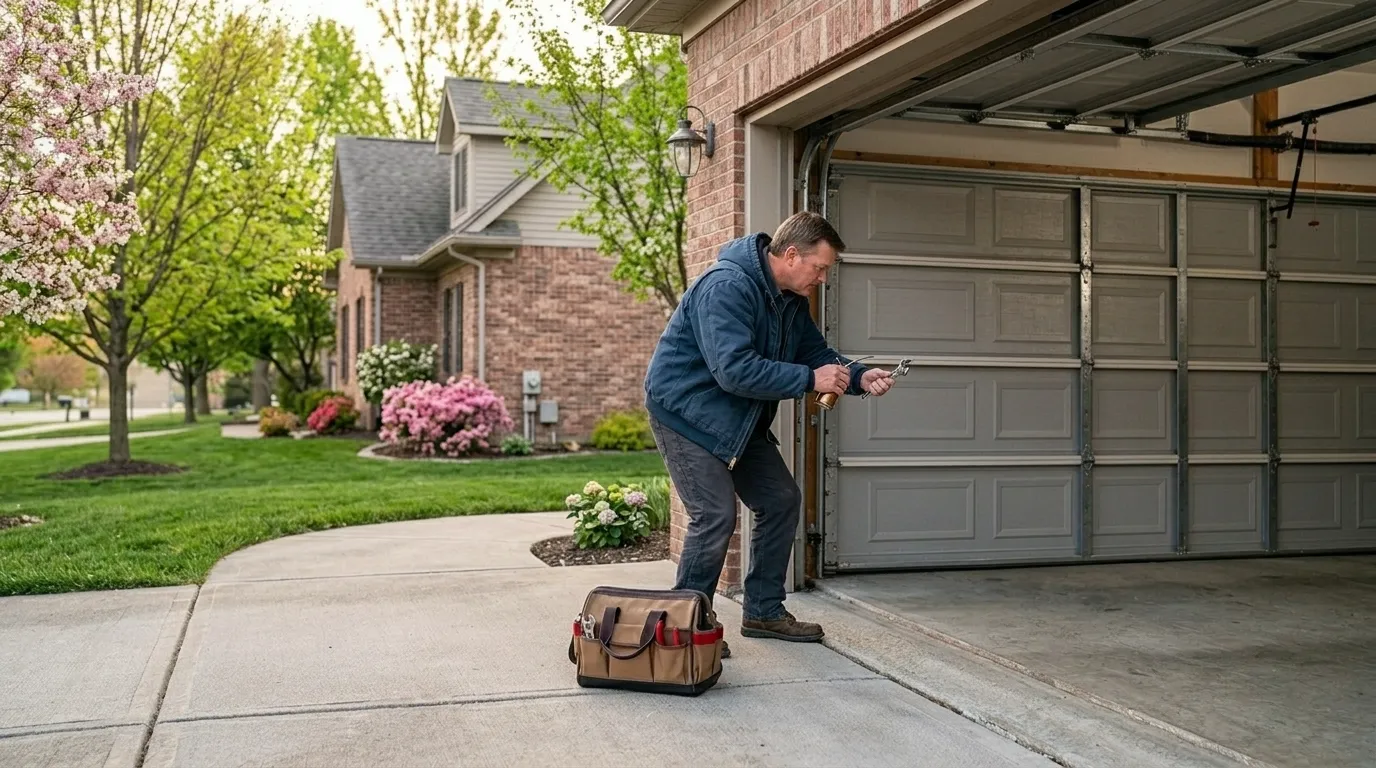
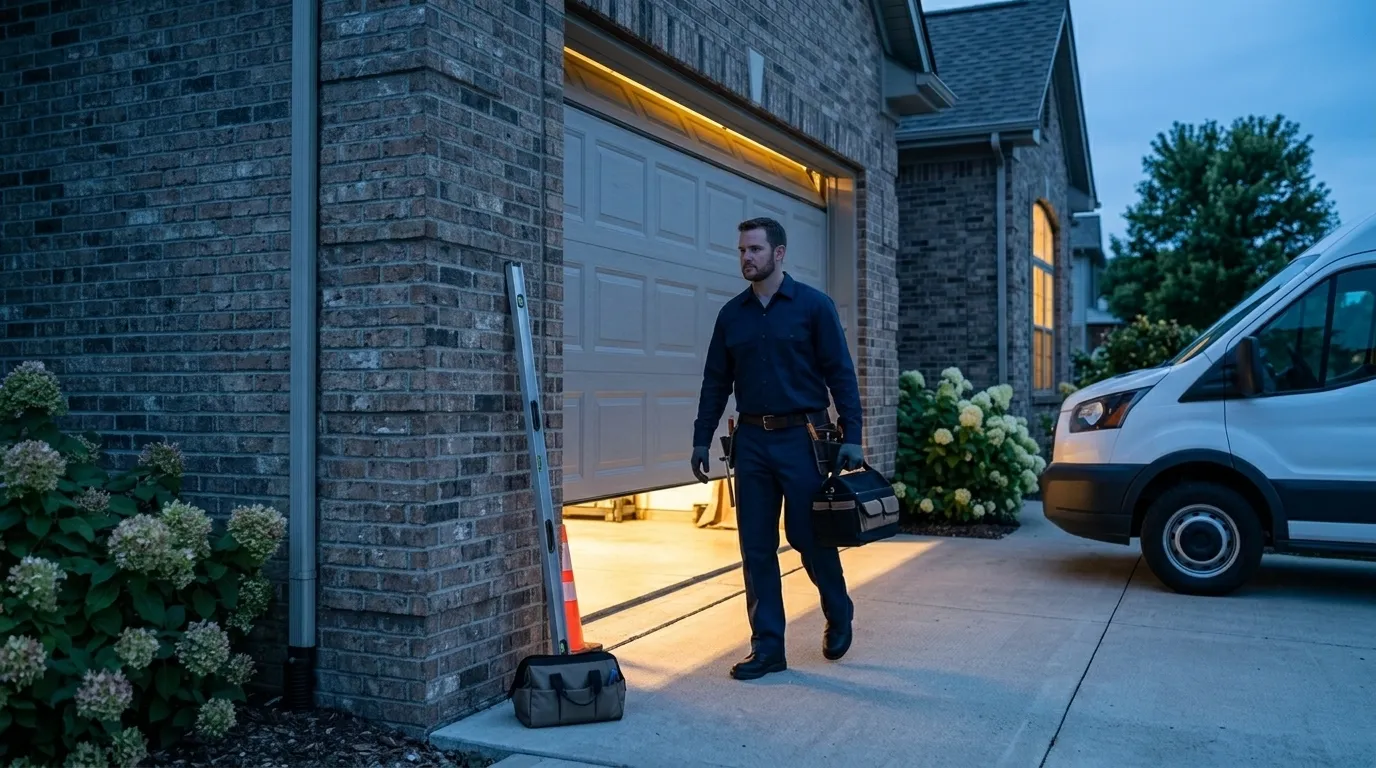
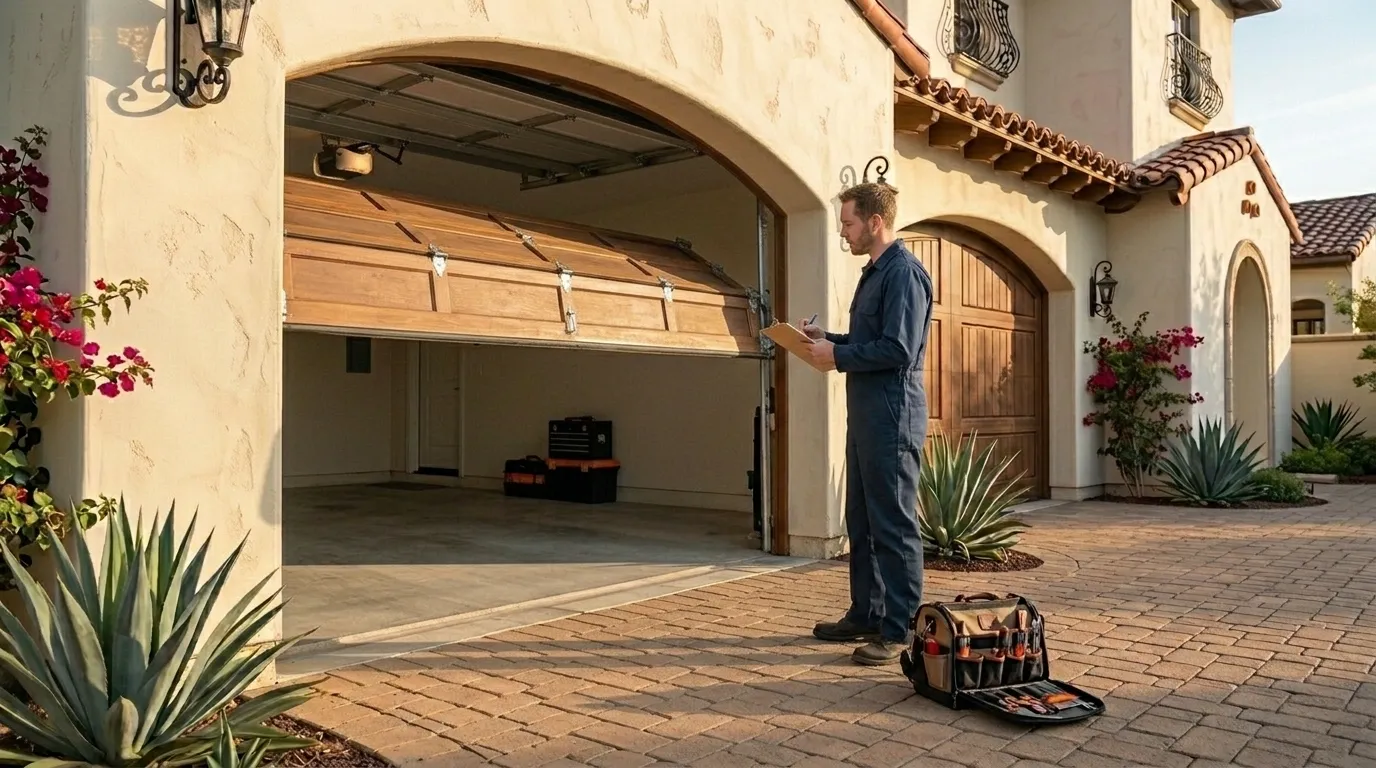
A look at jobs our crew has been on nearby.
Why Roeland Park Calls Us
Frequently Asked Questions
How often should a garage door in Roeland Park get serviced?
Once a year is a reasonable baseline for most doors, but older 1950s-era doors with original or near-original hardware benefit from a check every six to eight months, since the tolerances are tighter and wear shows up faster on aging brackets and track.
Is it worth repairing an old door instead of replacing it?
Often yes, if the frame and header are sound - a spring, roller, or cable job runs a few hundred dollars and can add years to a door. Replacement makes more sense once you're looking at a warped panel, a bent track, or hardware that no longer matches available parts.
Do you have a branch in Roeland Park?
No. We're based in Lenexa, about 10 miles away, and we drive out for scheduled maintenance and repair calls. There's no local depot, so quotes account for the visit as part of the job, not a separate fee.
Need Maintenance & Tune-Up in Roeland Park?
Call now for straight answers on cost and timing.