
Lenexa Garage Door Guide
What Lenexa's Weather and Older Doors Are Telling You
Lenexa homes built 1950-2004 face real cold-climate stress on springs and openers. Here's what the noises mean, and when they're worth calling someone.
- Licensed & Insured
- Same-Area Service Calls
- Upfront Pricing
What the Weather Here Does to It
Lenexa sits in a cold-moderate climate band, which means the steel in your door and track goes through real seasonal swings every year, not just a cold snap or two. Torsion springs are wound steel, and cold air makes that steel stiffer and less forgiving under load, which is exactly when a spring that's been fraying quietly for a year finally lets go. Most of the housing stock around here went up between 1950 and 2004, with the bulk of it - across the 19 named areas we work in - built in the 1980s and 90s.
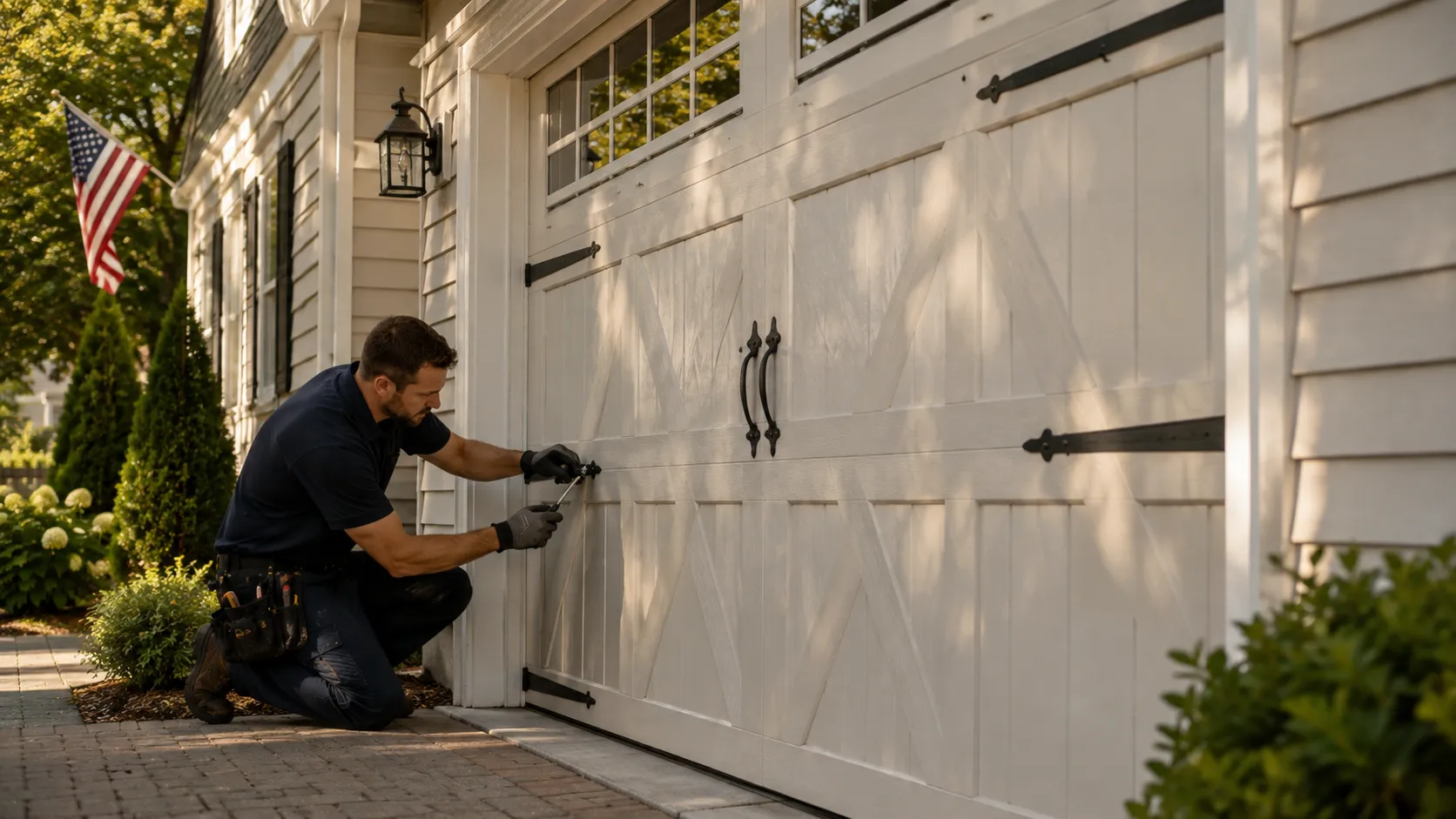
That matters because doors from that era used lighter-gauge tracks and bottom brackets than what goes in today, and after enough freeze-thaw cycles the hardware works loose at the same joints, over and over. You'll hear it before you see it: a scrape where the roller used to run smooth, a pop instead of a hum as the door starts. That's not a random noise.
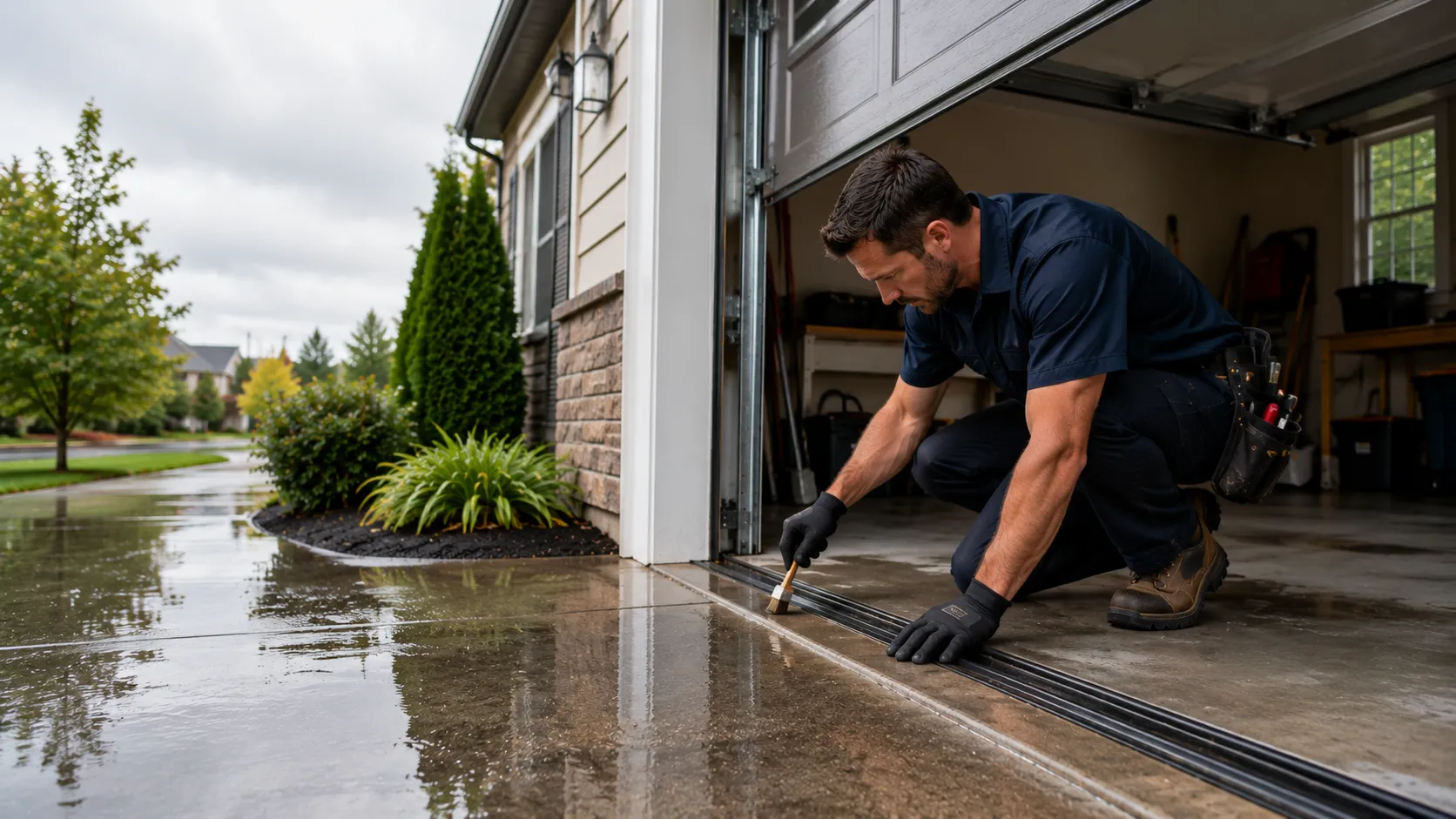
That's the specific sound of steel that's spent 20 or 30 winters expanding and contracting against bolts that were torqued once, in a warmer month, and never touched again. Weatherstripping on doors from that build era is often original or a cheap first replacement, and it hardens and cracks with cold exposure until it stops sealing at all.
When to Get Help
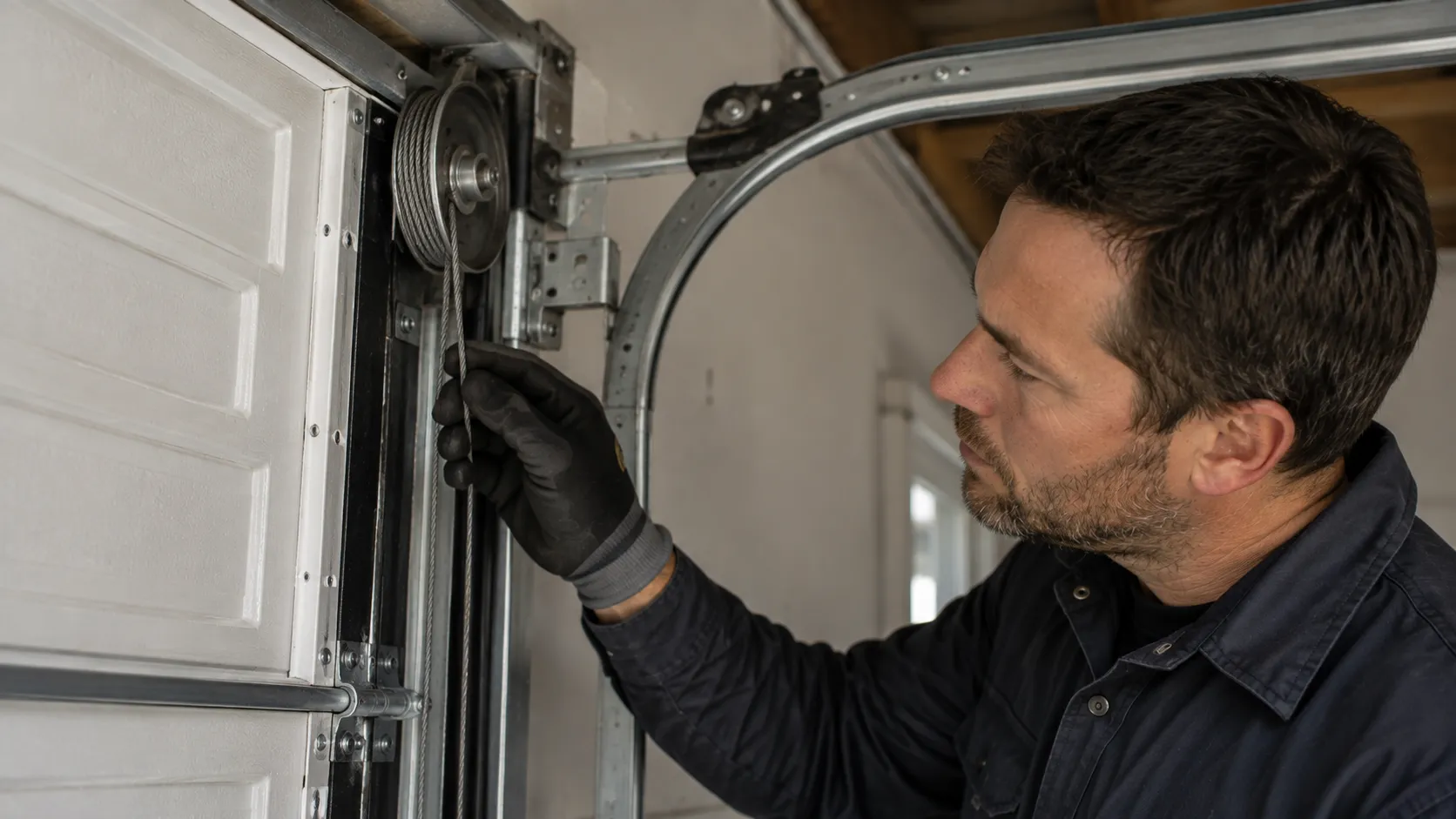
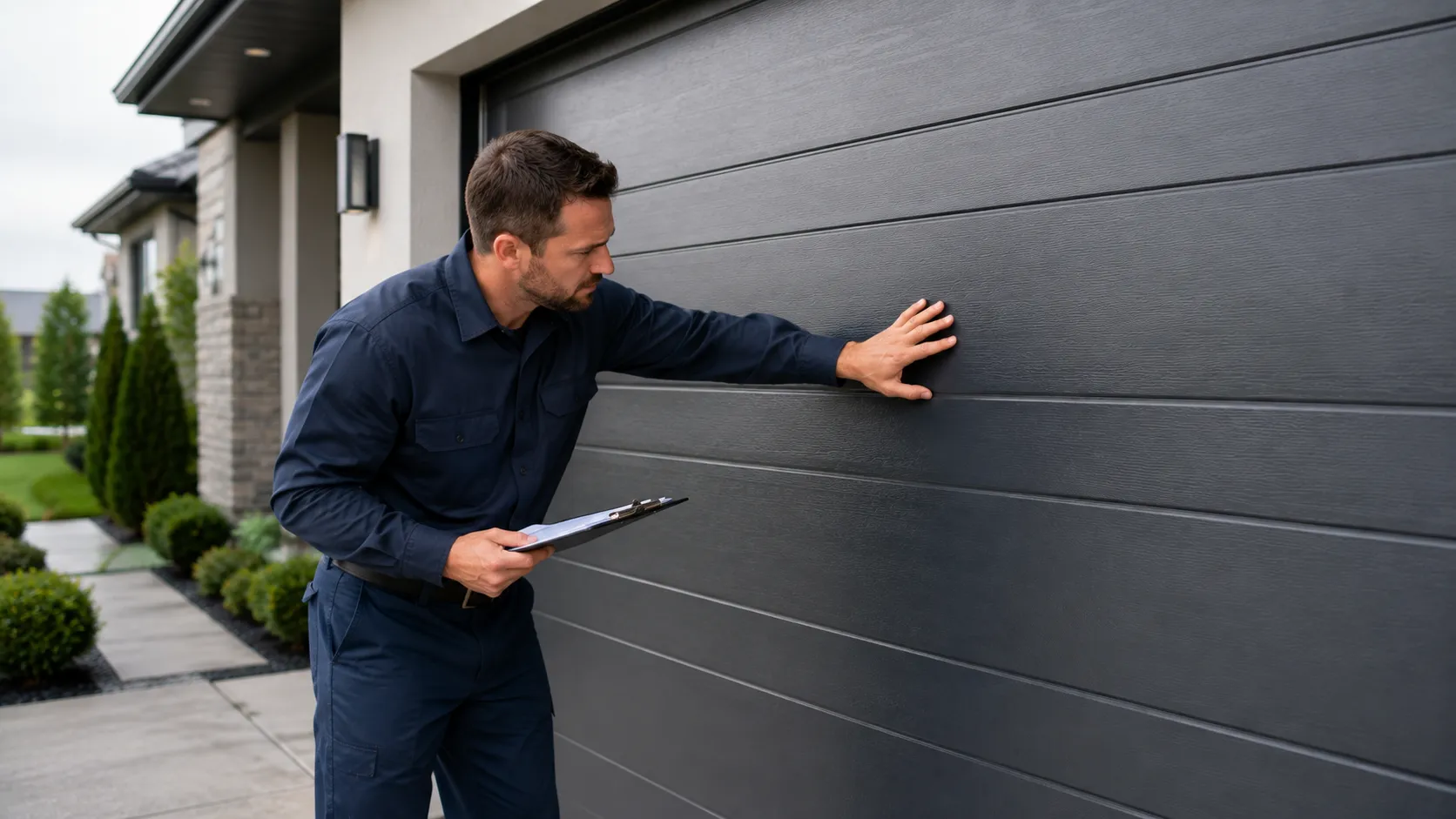
A single sharp bang, followed by the door refusing to move or dropping unevenly, is a broken torsion spring - stop using the opener and call, because the other spring is now carrying double load it wasn't built for. A rhythmic thunk every few seconds as the door travels is usually a bent track section or a roller that's finally given out; on the 1980s and 90s stock common here, that roller has likely been running dry for years. Grinding on opening, especially in the coldest part of winter, often means the opener's gears are working harder against stiffened lubricant and worn nylon parts - it will get louder before it fails outright.
A slow, sagging drift to one side while closing points to a cable that's stretched or partially frayed. None of these need a same-day call if the door still opens and closes evenly and the noise is mild. But a spring snap, a cable that's visibly frayed, or a door that's stopped mid-track are all situations where waiting costs you a second failure, usually a more expensive one.
If your opener is original to a house built well before 2000, the noise may simply be the motor nearing the end of its service life rather than one fixable part.
The Common Mistake
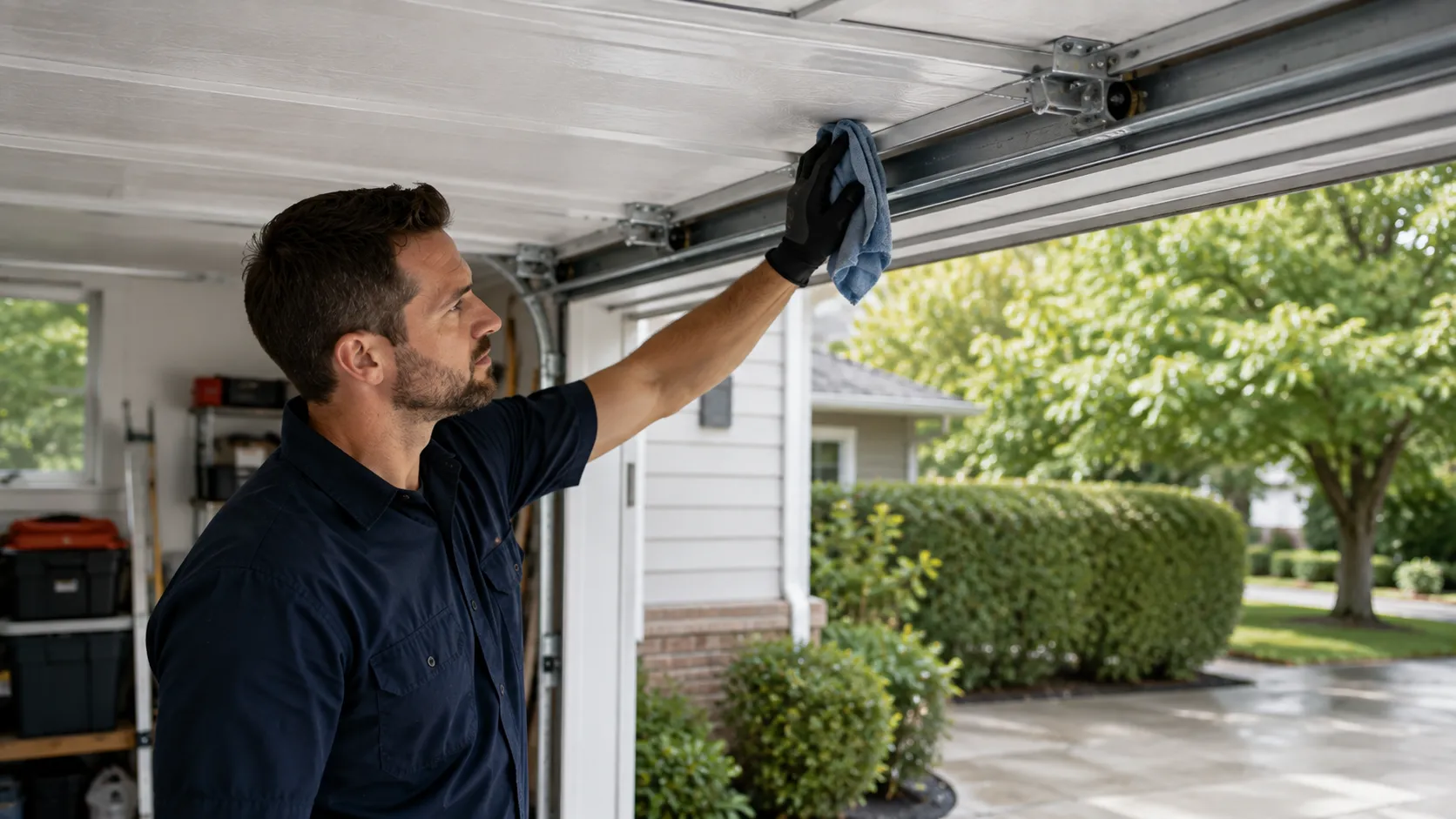
The mistake we see most in the older neighborhoods around here - the 1980s and 90s builds that make up most of this housing stock - is spraying WD-40 on a noisy track and calling it fixed. WD-40 is a solvent, not a lubricant; it strips old grease off rollers and hinges and leaves them drier than before, so the noise comes back louder within a couple weeks. The second mistake is tightening every bolt on the track to quiet a rattle, without checking whether the track is actually still plumb.
On a door that's cycled through 20-plus cold-to-hot seasons, the mounting brackets shift slightly over time, and tightening a bolt into a bracket that's already out of alignment just locks the misalignment in place. Third, people replace a single frayed cable and leave its matching cable alone, not realizing both were installed the same day and both have logged the identical number of cycles - if one is fraying, the other usually isn't far behind. None of this is complicated work, but it's easy to mask a real problem with a quick fix that makes the noise go away for a month and come back worse.
The Problem
Across the service area there are roughly 40,274 owner-occupied houses among 68,070 households, with a median household income of $96,725 - most owners here can afford to fix a door properly rather than patch it, but plenty still put it off until something breaks outright. The honest limitation: if your opener or door is original to a house built in the 1950-2004 window and it's failing in more than one way at once - motor noise, track wear, and a spring nearing the end of its cycle count - replacing the whole unit is usually cheaper over five years than repairing it three separate times.
We won't talk you into a full replacement when a single part will do the job, but we also won't sell you a $40 roller kit on a door where the opener, springs, and track are all near the same age and all showing wear together. That's not a hard sell, it's just what 30-plus winters of cold-cycle stress on the same hardware tends to look like once it starts to go.
How We Can Help
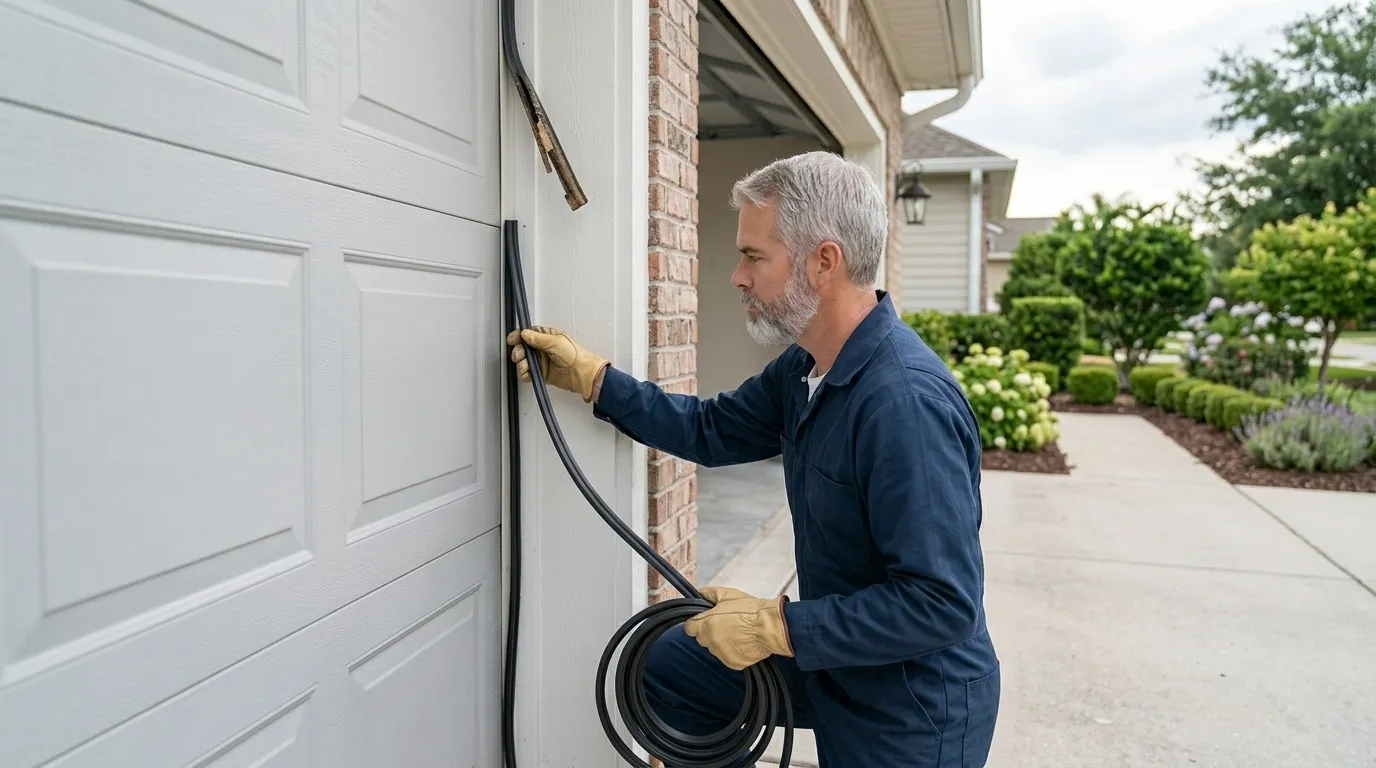
Garage Door Repair
Springs, cables, tracks, rollers, and openers fixed by a tech who explains the problem before touching anything.
Learn more →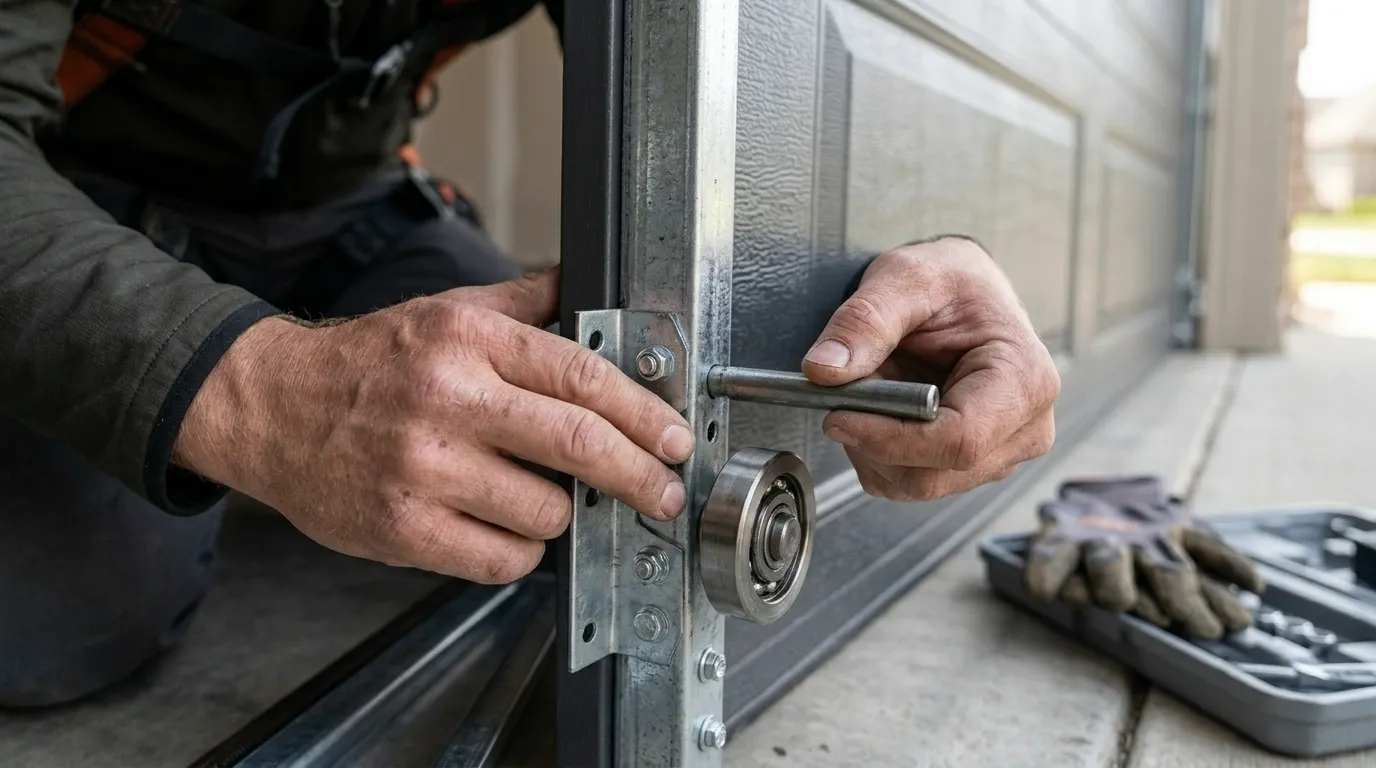
Garage Door Installation
New sectional doors sized and installed for the housing stock actually built in this area.
Learn more →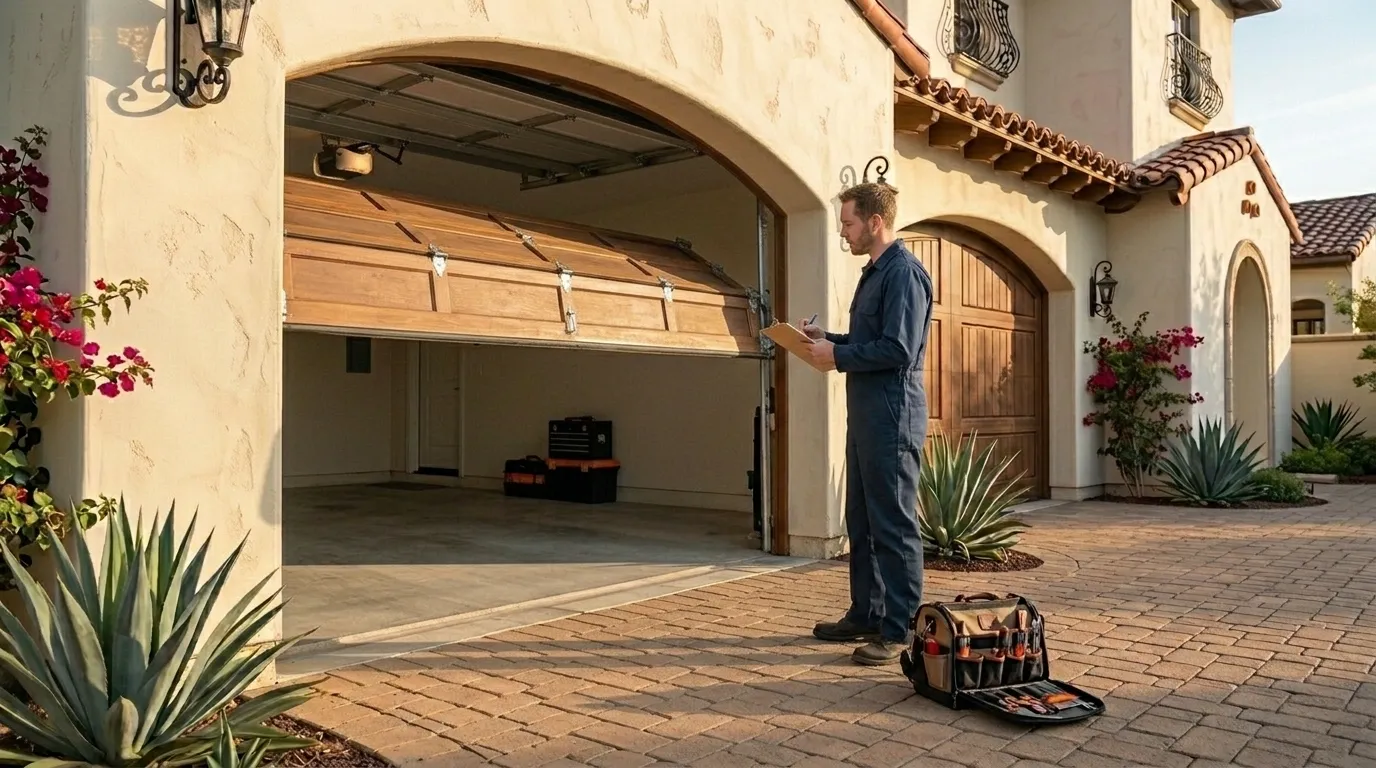
Garage Door Service
Tune-ups, lubrication, and safety checks that catch a small problem before it becomes a service call.
Learn more →Frequently Asked Questions
Why does my garage door make more noise in winter than summer?
Cold makes steel stiffer and lubricant thicker, so springs, rollers, and gears all work harder to do the same job. In Lenexa's cold-moderate climate, that seasonal swing repeats every year, and it's usually what turns a quiet worn part into an audible one during the coldest months.
My door is original to a house built in the 1980s - is that a problem?
Not automatically, but that era of hardware used lighter track and bracket gauges than current doors, and after decades of freeze-thaw cycling, the joints work loose. If the noise is new and getting worse, it's worth a look before a part fails outright rather than gradually.
Is WD-40 an okay fix for a squeaky track or hinge?
No - it's a solvent, and it strips existing grease off moving parts rather than lubricating them. The noise usually comes back within a few weeks, louder than before. A proper lithium-based grease made for garage door hardware holds up much better.
When does it make more sense to replace than repair?
When the opener, springs, and track are all roughly the same age and all showing wear at once - common on original hardware in houses built well before 2000. Fixing each separately over a year often costs more than one replacement job.
Have a Door That Needs a Second Opinion?
Call and describe what it is doing - we will tell you what it likely is.