
Lenexa Garage Door Guide
Is Your Lenexa Garage Door Worth Repairing, or Is It Time to Replace It
Lenexa's housing stock runs 1950 to 2004, median 1980, in a cold-moderate climate. Here's how to tell if your door's worth repairing or replacing.
- Licensed & Insured
- Same-Area Service Calls
- Upfront Pricing
What the Weather Here Does to It
Lenexa sits in a cold-moderate climate band, which doesn't sound dramatic until you've watched a garage door bind on a January morning after working fine all fall. Steel contracts in the cold.
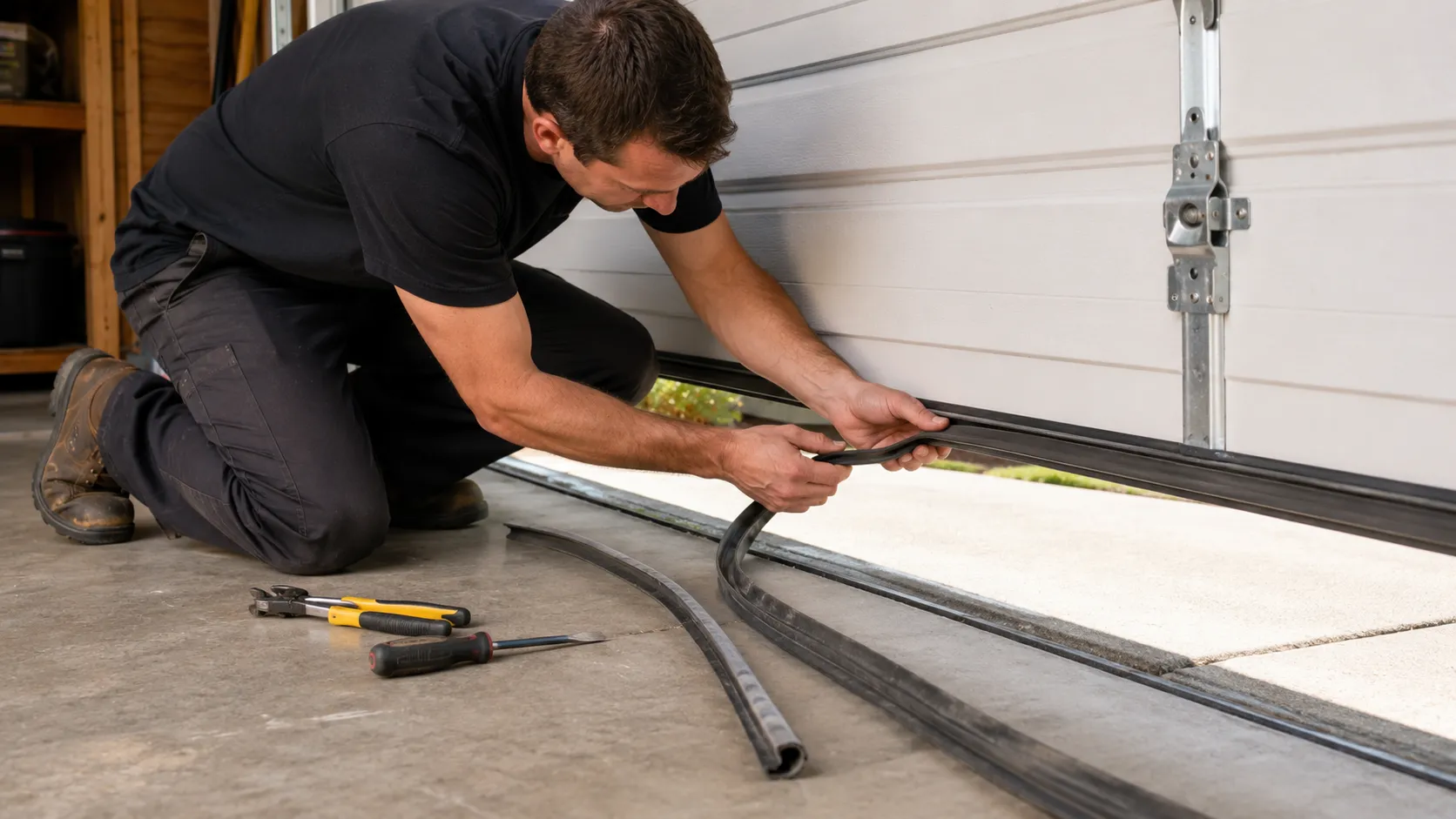
Weatherstripping that was pliable in August turns brittle by December, and the gap under the door widens enough to let wind in around the bottom seal. That matters more here than it would somewhere with a mild winter, because the swing between summer heat and winter cold puts real stress on panels and hardware twice a year, not once.
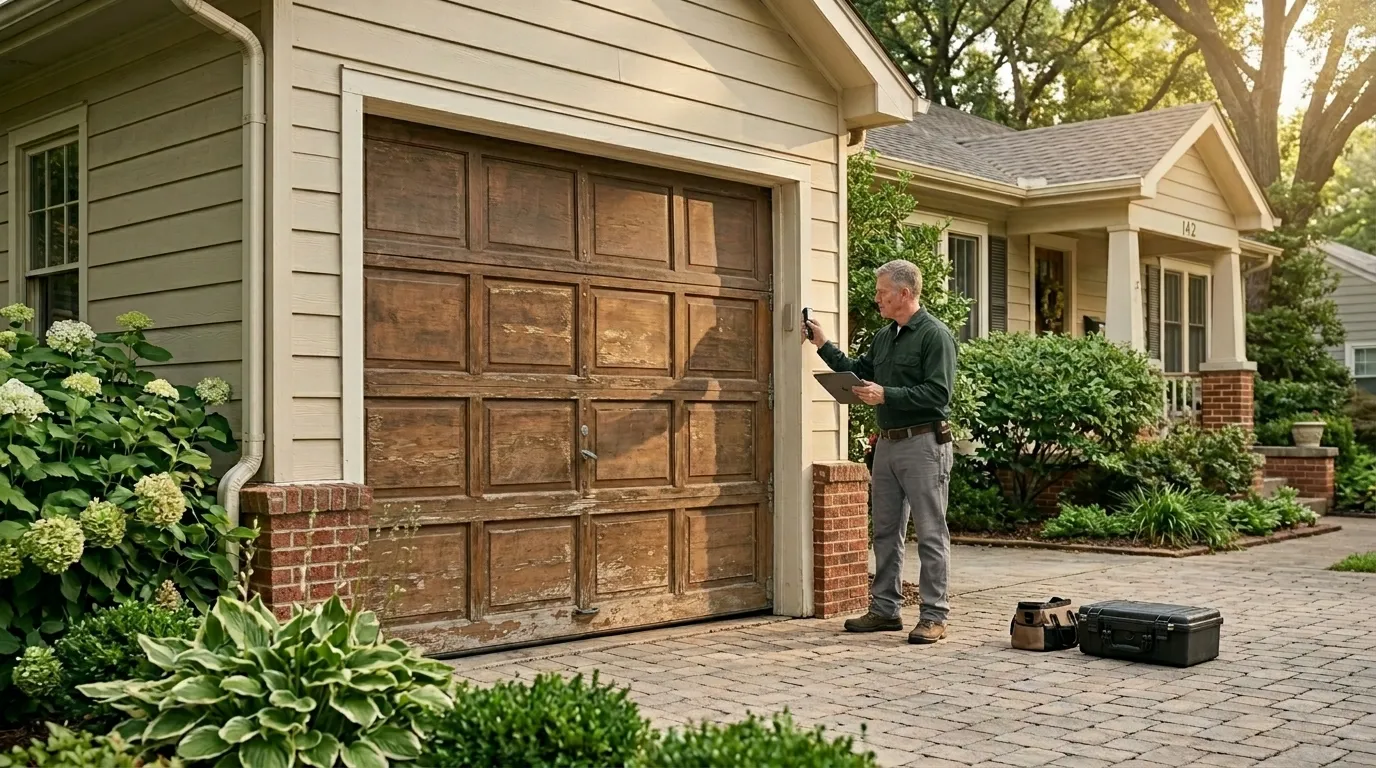
Most of the doors we're called out to see were installed when the house was built, and across this area that median build year is 1980. A door installed then wasn't engineered with today's insulation standards or corrosion-resistant hardware. Non-insulated steel panels flex more in cold, and the torsion springs sized for that era's doors were often lighter than what a comparable door would carry today.
None of that means the door is junk. It means the cold finds the weak point faster than it would on a newer install, and that weak point is usually the spring, the bottom seal, or a rusted hinge, not the whole door.
When to Get Help
Call before the door fails, not after. A torsion spring that's starting to go makes a distinct grinding or popping sound when the door travels, and the door itself may look like it's opening unevenly, one side rising faster than the other. That unevenness is a warning sign worth acting on quickly, because a spring under uneven load can snap a cable next.
Given that a lot of Lenexa's housing dates to the 1980s and 90s, we also see original openers still running on doors well past their expected working life. If the opener strains, reverses on its own, or takes two or three tries to close, that's not a quirk to live with. It's a sign the door isn't balanced correctly, which puts more wear on the opener motor than it was built to handle.
We don't recommend waiting for a full failure to make the call. A stuck door blocks a car in or out, and a spring that lets go under tension can do real damage to whoever's standing near it. If something sounds or feels off, that's the point to get it looked at, not after it's stopped working.
The Common Mistake
The mistake we see most is treating the opener as the problem when the door is the problem. Someone hears grinding or notices the door struggling and swaps the opener, assuming a mechanical part solved a mechanical noise. Ten minutes later the new opener is straining against the same worn spring or the same track that's slightly bent from decades of use, and the underlying issue is still there.
This shows up often on houses from the 1980s and 90s stock that makes up most of this area, because those doors have had 30 to 40 years to accumulate small issues: a track knocked slightly out of alignment, rollers that were never replaced, hinges rusted just enough to bind. An opener replacement doesn't touch any of that. It just asks the motor to fight harder against problems that were already there.
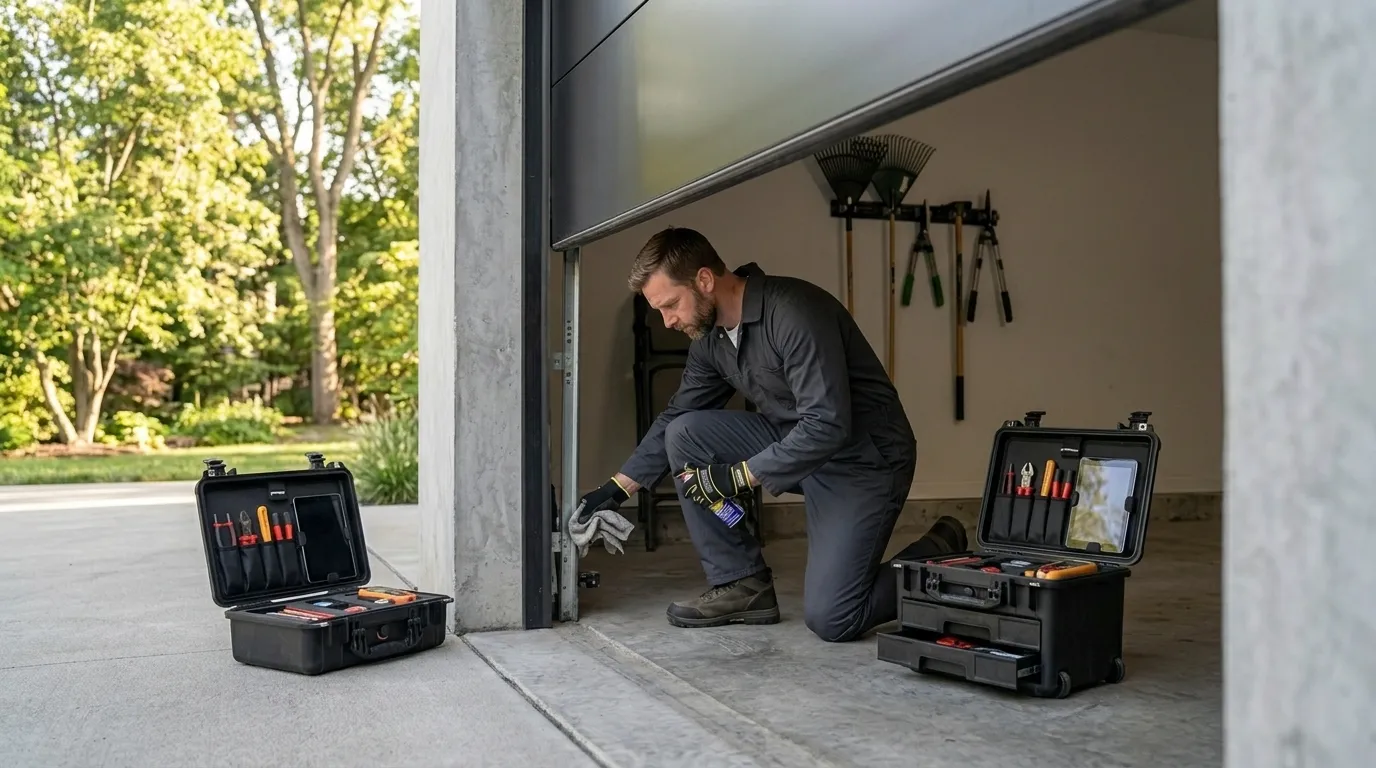
The fix is checking the door's balance and hardware first. If the door doesn't hold its position halfway open when the opener is disconnected, that's a spring or cable issue, not an opener issue, and no new motor will fix it.
The Problem
Here's the honest math on when to fix and when to replace. If the door's frame, track, and panels are sound and the issue is a spring, a cable, a roller, or a bad seal, that's almost always worth repairing regardless of the door's age. Those are wear parts, and replacing them on a solid door is cheaper than replacing the whole unit.
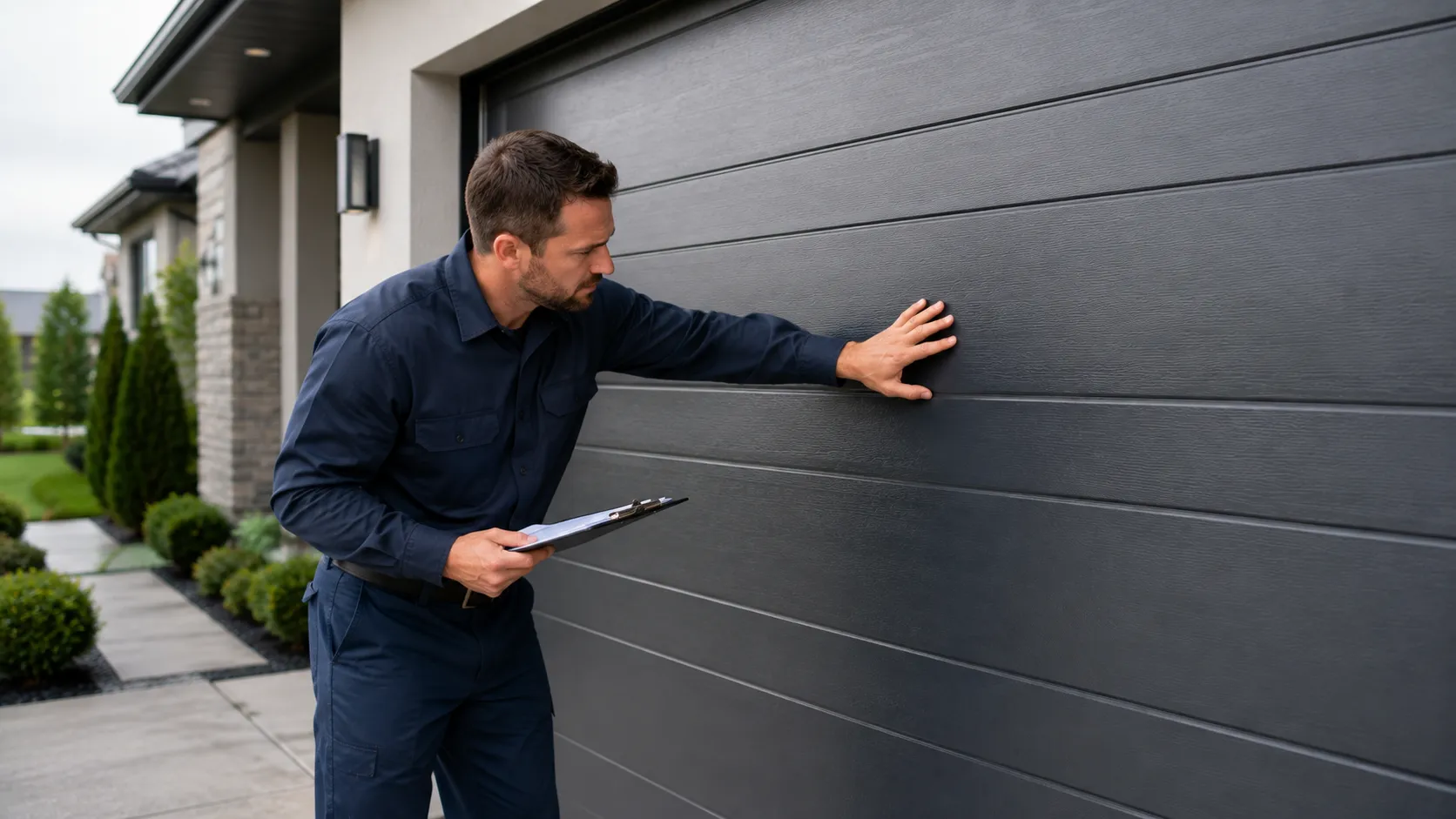
Where it stops making sense is when the panels themselves are rusted through, warped, or delaminating, which happens more on the non-insulated steel doors common on 1980s builds once they've taken 40 winters of temperature swings. At that point you're not fixing a door, you're patching a door that's going to keep failing in new spots. We also run into obsolete panel styles and sizes from that era that simply aren't manufactured anymore, so sourcing a matching replacement panel can take longer and cost more than swapping the whole door for a current insulated model.
With median household income in this area around $96,725, a full replacement with a better-insulated door is often within reach, and it's usually the better spend once you're past two or three separate hardware repairs on the same aging door.
How We Can Help
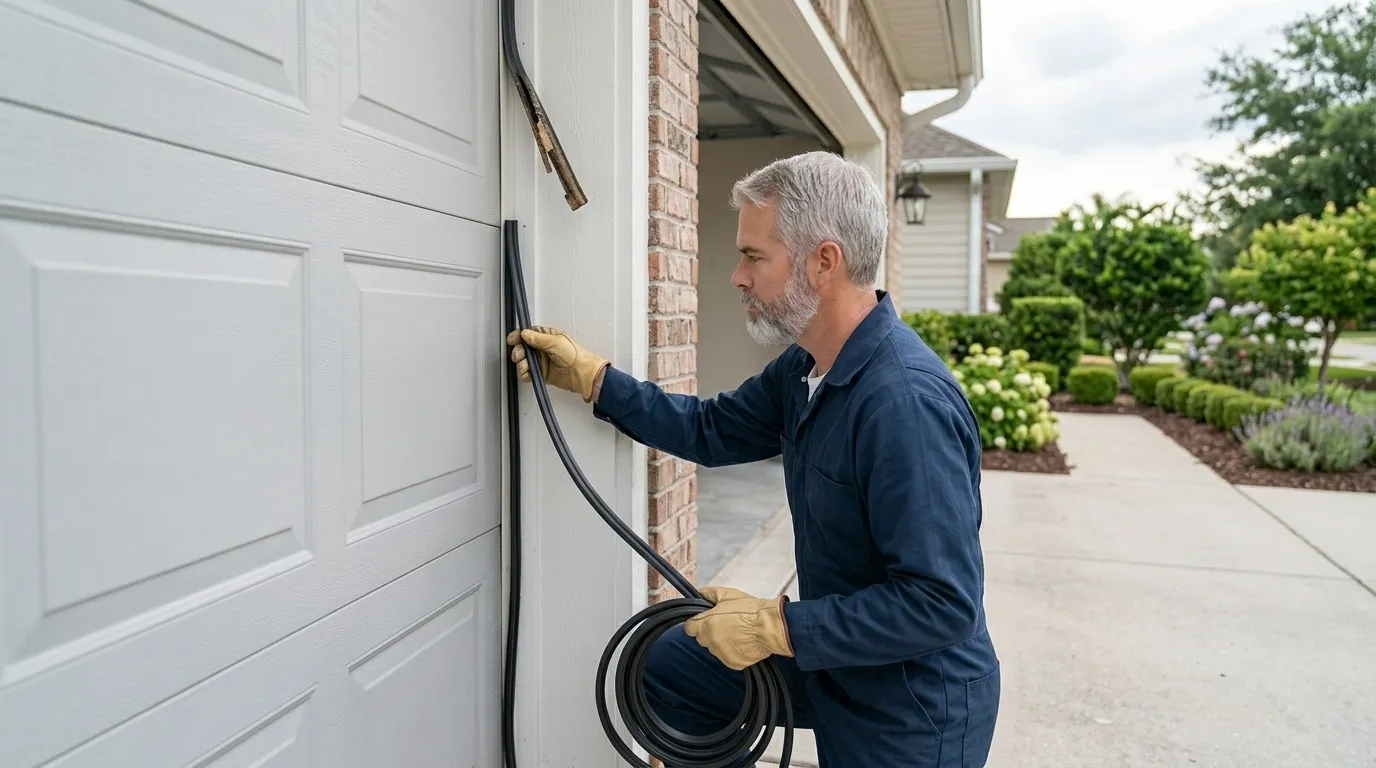
Garage Door Repair
Springs, cables, tracks, rollers, and openers fixed by a tech who explains the problem before touching anything.
Learn more →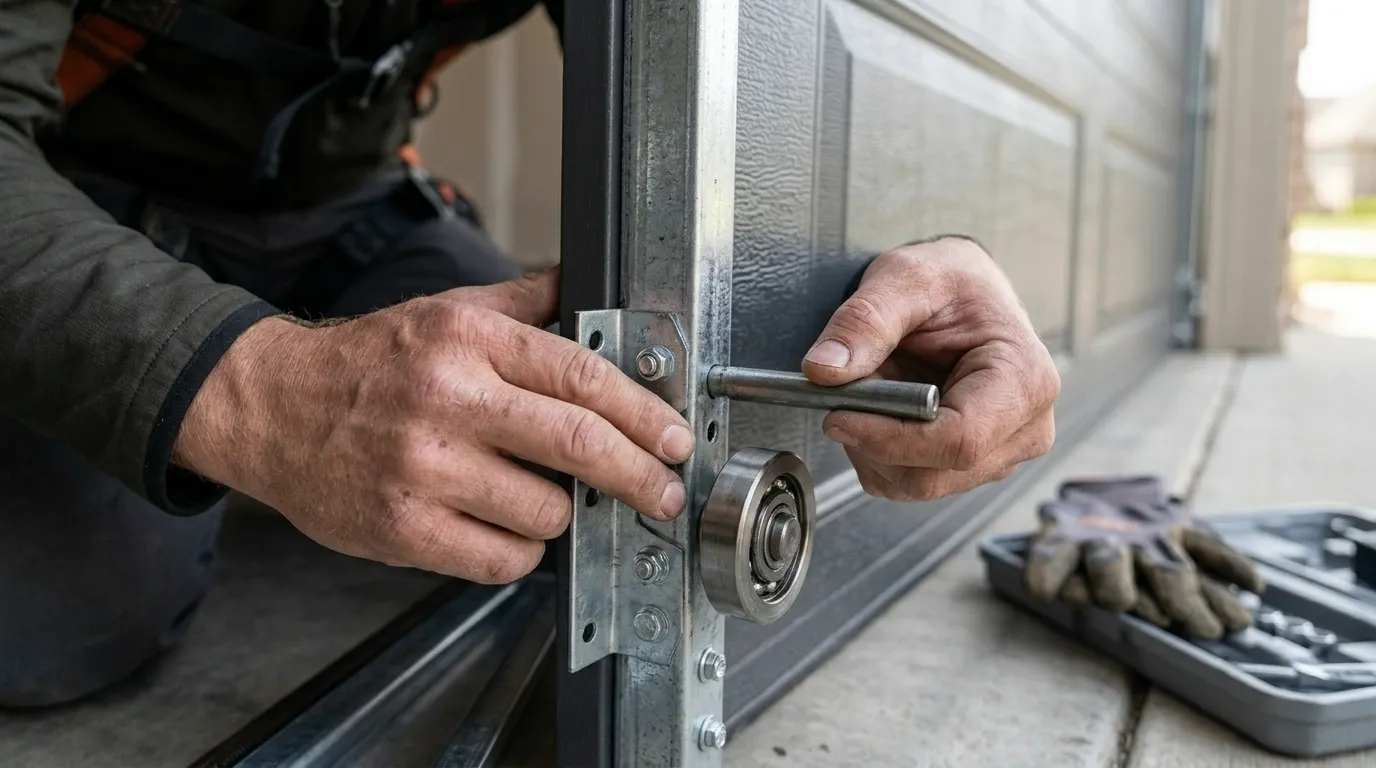
Garage Door Installation
New sectional doors sized and installed for the housing stock actually built in this area.
Learn more →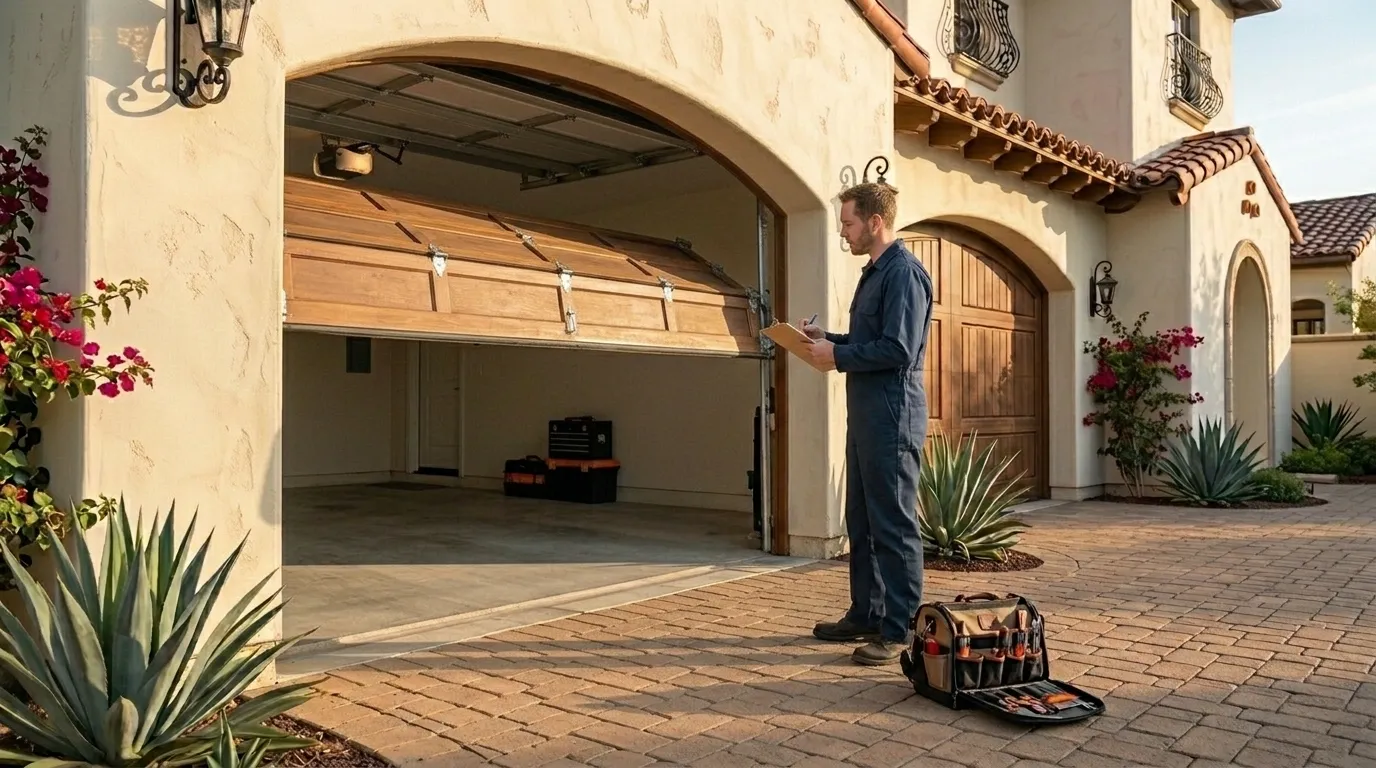
Garage Door Service
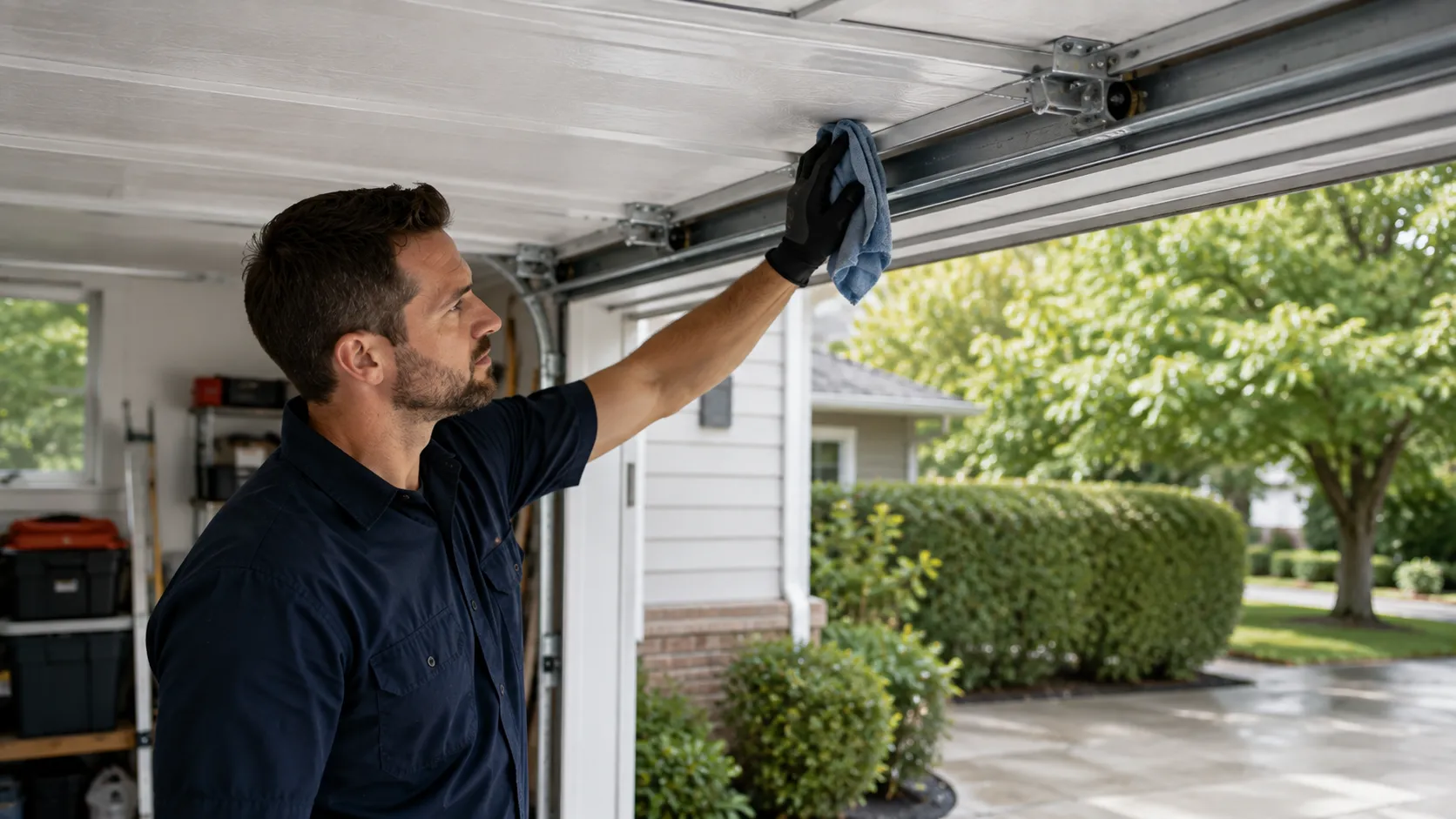
Tune-ups, lubrication, and safety checks that catch a small problem before it becomes a service call.
Learn more →Frequently Asked Questions
My door is from the 1980s. Is it too old to repair?
Age alone doesn't decide it. If the panels are solid and the problem is a spring, cable, or roller, repair is usually the right call even on an older door. It's rust, warping, or delaminated panels that push a door from repairable into replace-it territory, and those show up more often once a door has been through 30 or 40 winters.
Why does my door act up more in winter?
Lenexa's cold-moderate climate puts real stress on steel doors twice a year as temperatures swing between summer heat and winter cold. Metal contracts, seals stiffen, and any hardware that's already slightly worn tends to show it first in the cold, which is why winter calls often turn up problems that were building for months.
Should I replace the opener if the door struggles to close?
Not automatically. A struggling door is often a balance or spring problem, and a new opener won't fix that, it'll just strain against the same underlying issue. Disconnect the opener and check if the door holds position halfway open. If it doesn't, that's hardware, not the motor.
Can you match an old panel style if just one panel is damaged?
Sometimes, but not always. Doors from the 1980s and 90s often used panel styles and sizes that aren't made anymore, so we can't promise an exact match on short notice. Depending on what's available, a full door replacement can end up faster and more cost-effective than chasing down one obsolete panel.
Have a Door That Needs a Second Opinion?
Call and describe what it is doing - we will tell you what it likely is.