
Lenexa Garage Door Guide
What Sends a Garage Door Off Its Track in Lenexa
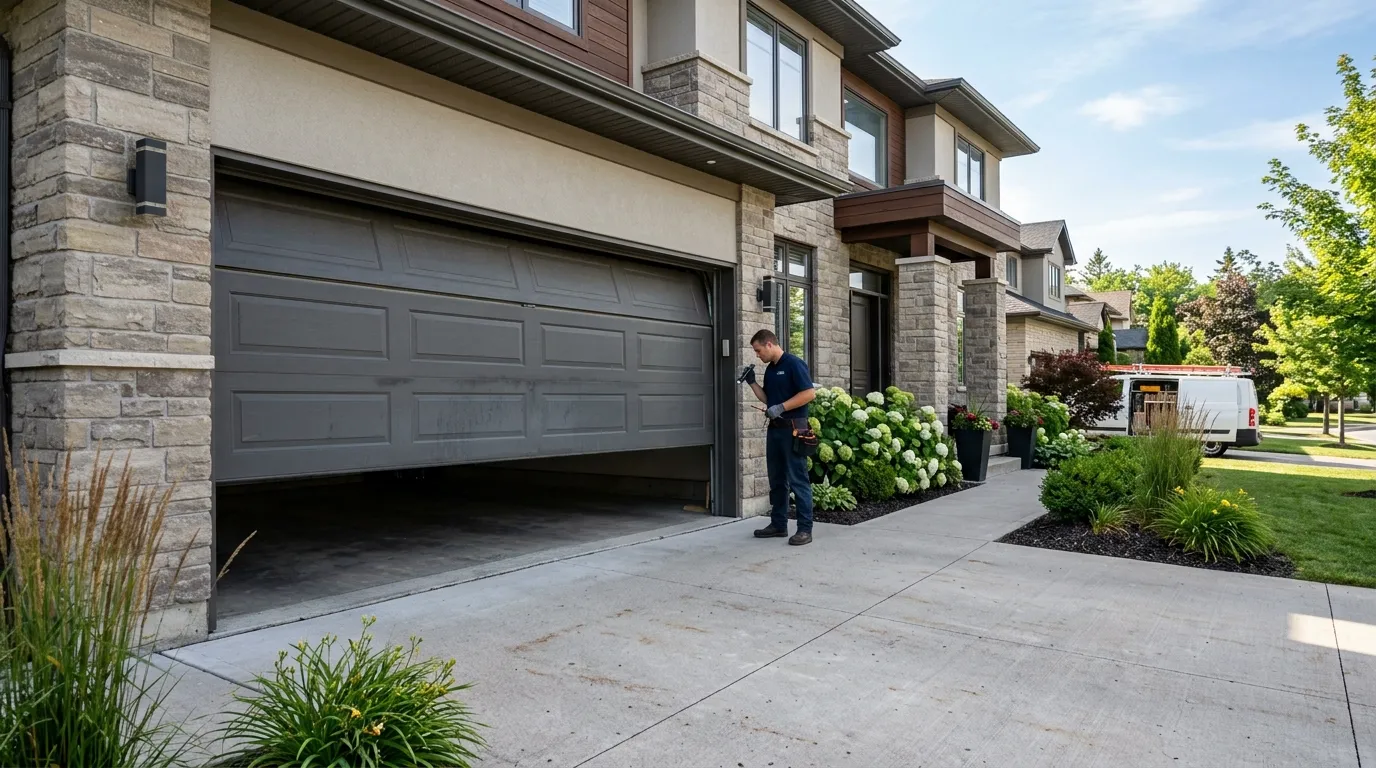
Most homes in Lenexa went up between 1950 and 2004, and the cold winters here work on that older track hardware in a specific way. Here's what actually knocks a door loose.
- Licensed & Insured
- Same-Area Service Calls
- Upfront Pricing
What the Weather Here Does to It
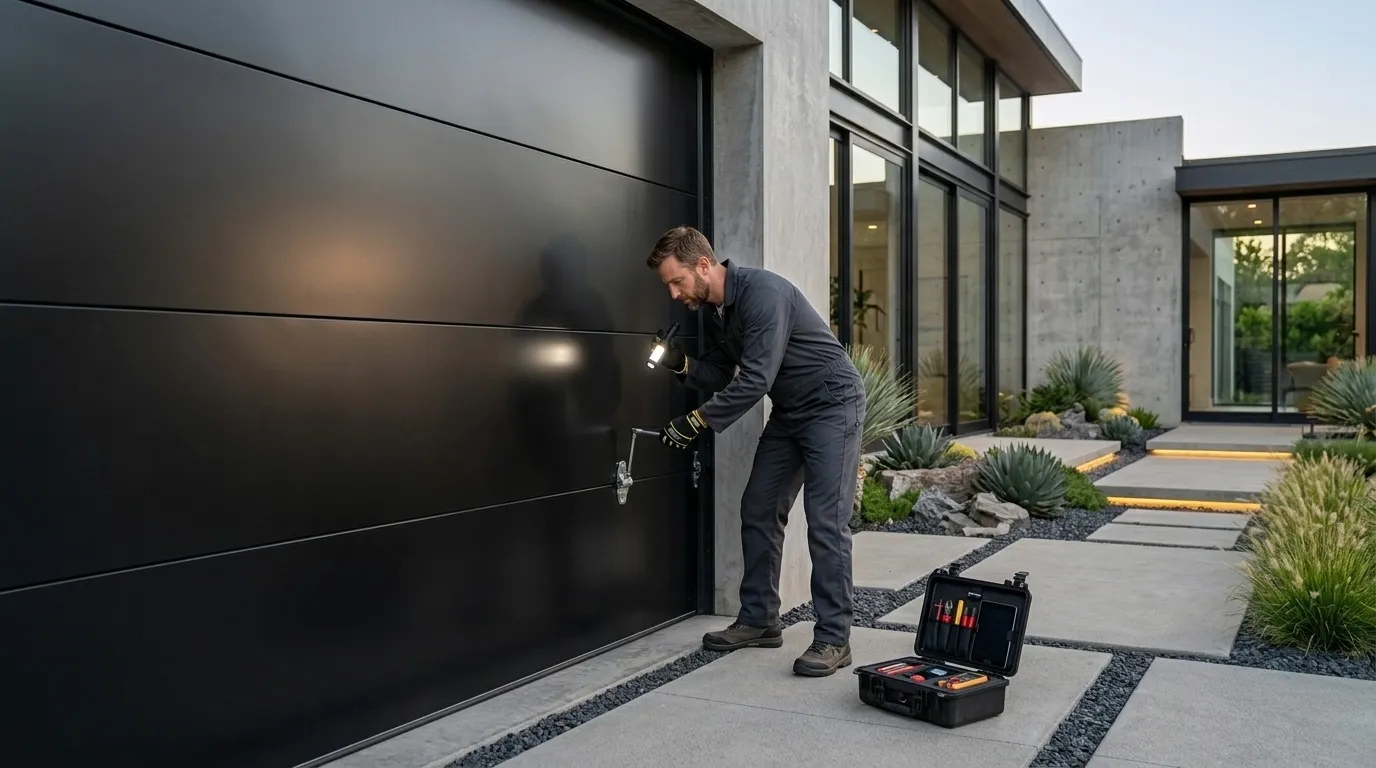
Lenexa sits in a cold moderate climate band, which means the winters run cold enough, often enough, to matter for the metal on your garage door. Steel track and roller hardware contract in the cold, and the grease packed into rollers and hinges from the factory stiffens up right along with it. A roller that's slightly out of round or a track bracket that's a hair loose won't show it in July, but on a cold morning it can catch instead of roll, and once it catches, it can jump the lip of the track.
Ice and frost buildup at the bottom section adds another layer: a door that's binding on a frozen weather seal puts extra side load on the rollers as the opener tries to force it through. This isn't a one-time event. It's the freeze-thaw cycle repeating all winter, working on hardware that was never rated for zero clearance.
The colder stretches are when we see the call volume for off-track doors climb, and it's rarely a coincidence tied to a single storm - it's the accumulated wear from a season of cold starts.
When to Get Help
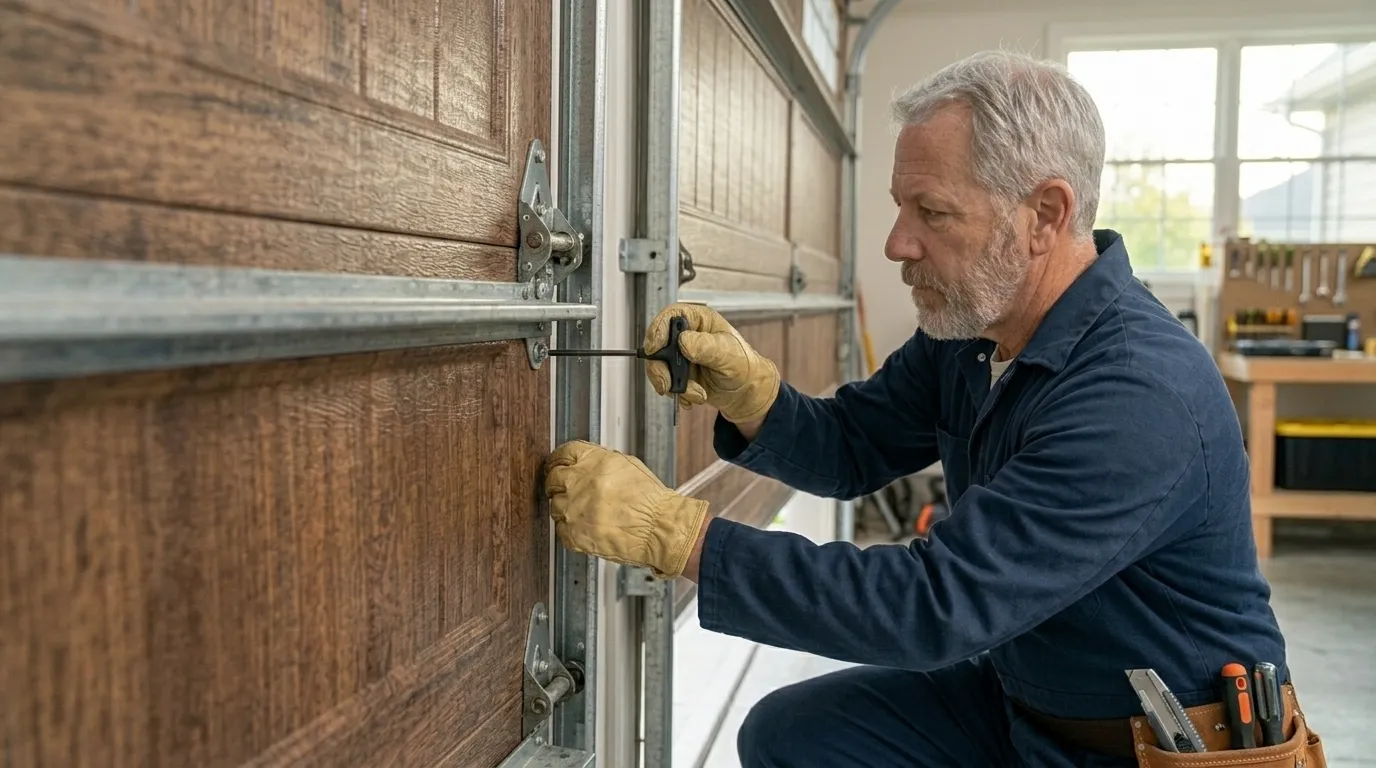
A door that's visibly hanging at an angle, with one side higher than the other, has already come off the track on at least one roller - don't run the opener again once you notice this, because each cycle bends the track further and can pull the bracket off the framing. Same goes for a door that's making a grinding or popping sound partway through its travel; that's usually a roller riding on the edge of the track instead of inside it. If a cable looks frayed or a spring looks stretched unevenly, that's a separate problem but it often shows up alongside track issues on older systems, and it's not one to wait on.
Call before you try the opener a third time. If the door still moves under its own weight and nothing looks bent, you may have time to get it looked at during regular hours rather than as an emergency. But once a door is stuck half open or won't clear the opening, that's a safety issue for anyone in the driveway, not just an inconvenience.
The Common Mistake
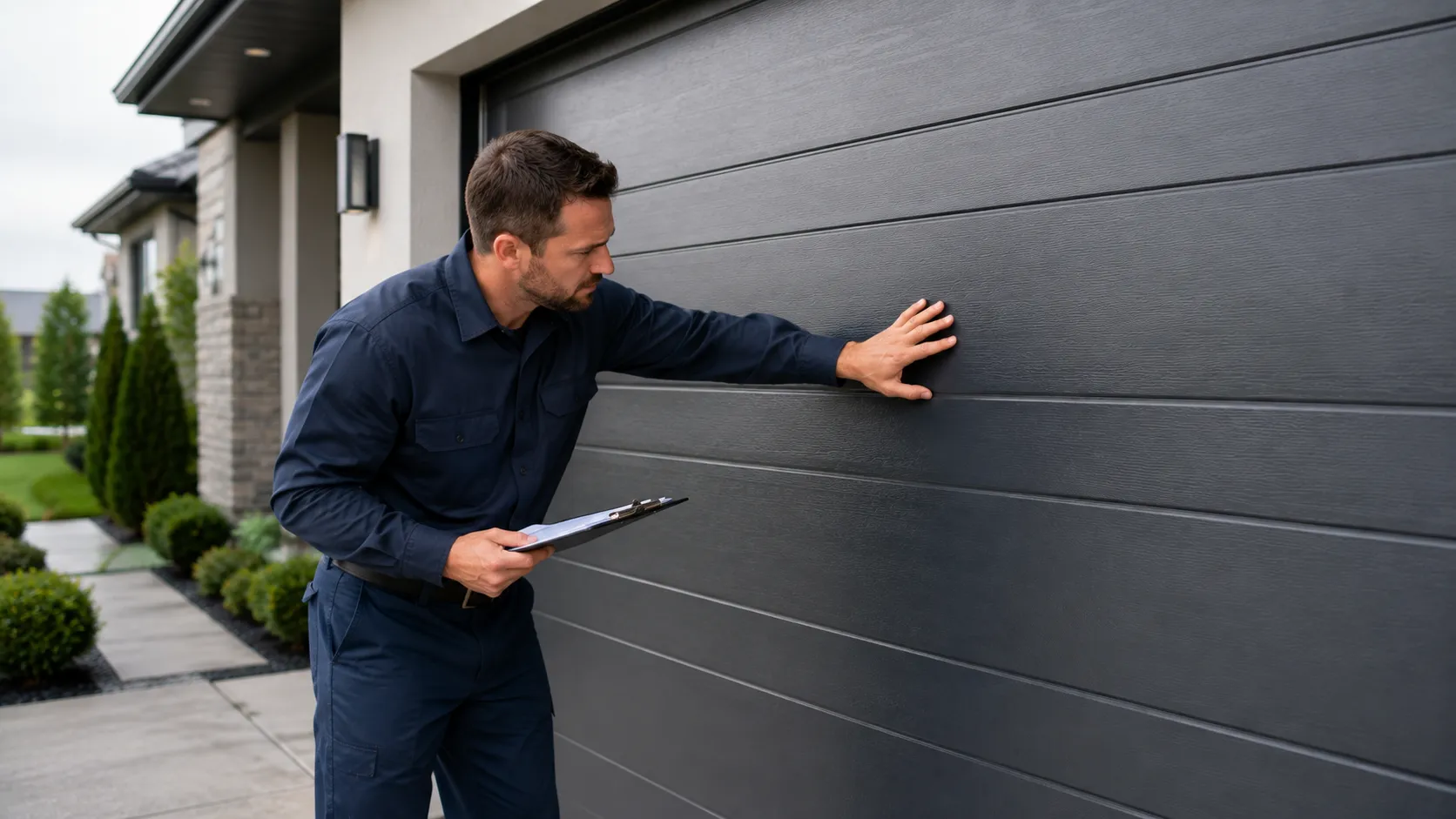
The mistake we see most often is someone finding a roller sitting outside the track and trying to muscle the door back into line by hand, or by hitting the opener button again and again hoping it'll seat itself. It won't. Pushing a misaligned panel through the opener just bends the track a little more each time, and a track that's bent even slightly out of parallel will keep throwing rollers no matter how many times you reseat them.
The second common mistake is reaching for a general-purpose spray lubricant on rollers and hinges. It works for about a week, then it attracts dust and grit off the garage floor and turns into a grinding paste inside the roller bearing - worse than doing nothing. On the housing stock common around here, built mostly in the 1980s and 90s, track brackets were fastened directly to jamb framing that's now had thirty-plus years to shift slightly, so a track that looks straight can still be a few degrees off where it bolts to the wall.
That's not something you can eyeball and fix with a rubber mallet.
The Problem
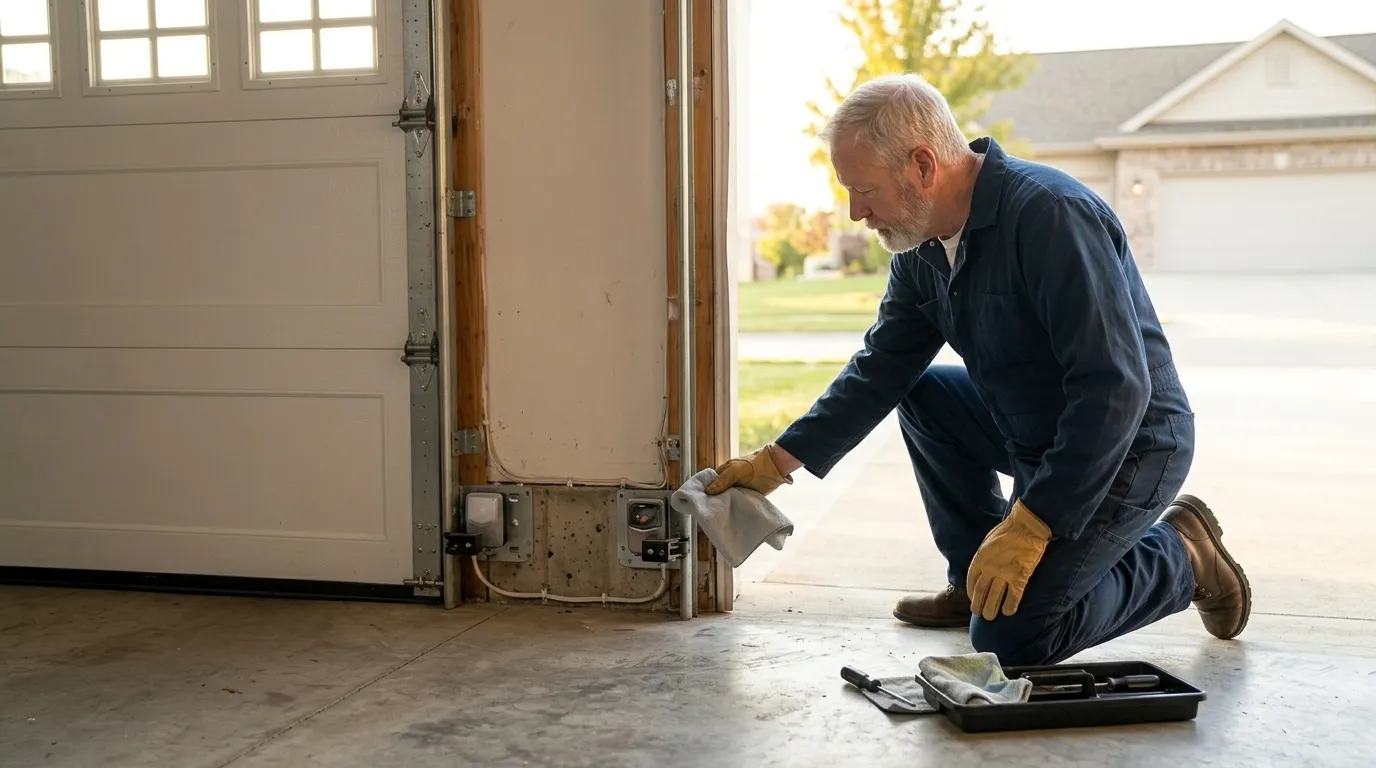
Most of the housing in this area was built between 1950 and 2004, with the bulk of it going up in the 1980s and 90s, and that matters for track hardware specifically. Track systems from that era are lighter-gauge steel than what's installed new today, and after decades of temperature swings the brackets holding the track to the jamb work loose a fraction at a time. Add a worn roller - nylon rollers from that period tend to flat-spot after years of use - and you've got a track slightly out of alignment paired with a wheel that doesn't roll true.
That combination is what actually throws a door off track: it's rarely one dramatic failure, it's an accumulation. A bent track section near the bottom rollers, from a car bumper tap or a snow shovel years back, will do it faster. Here's the honest limit: a track that's bent more than slightly usually isn't worth straightening.
The metal's already fatigued at the bend point, and it'll fail again. Past a certain point, replacing the track section costs less in the long run than chasing another callback.
How We Can Help
Garage Door Repair
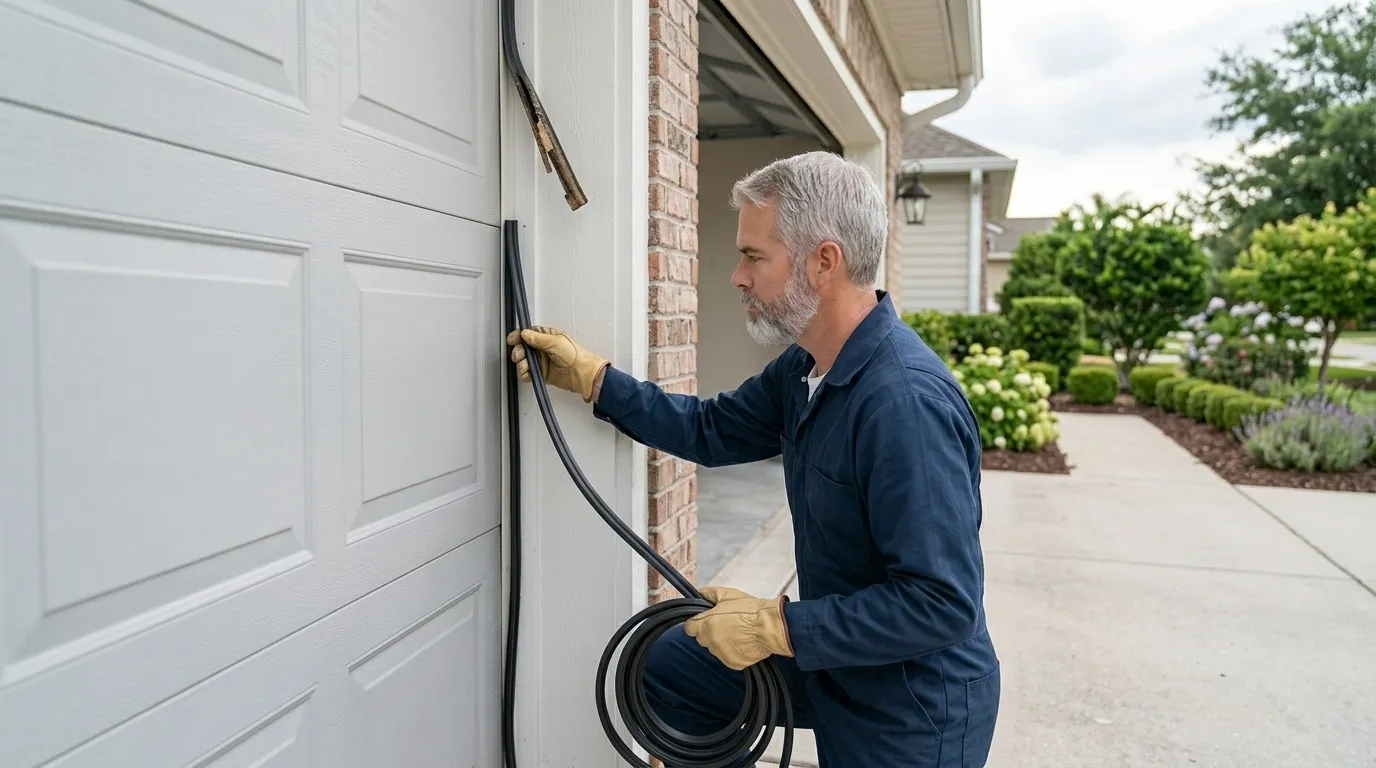
Springs, cables, tracks, rollers, and openers fixed by a tech who explains the problem before touching anything.
Learn more →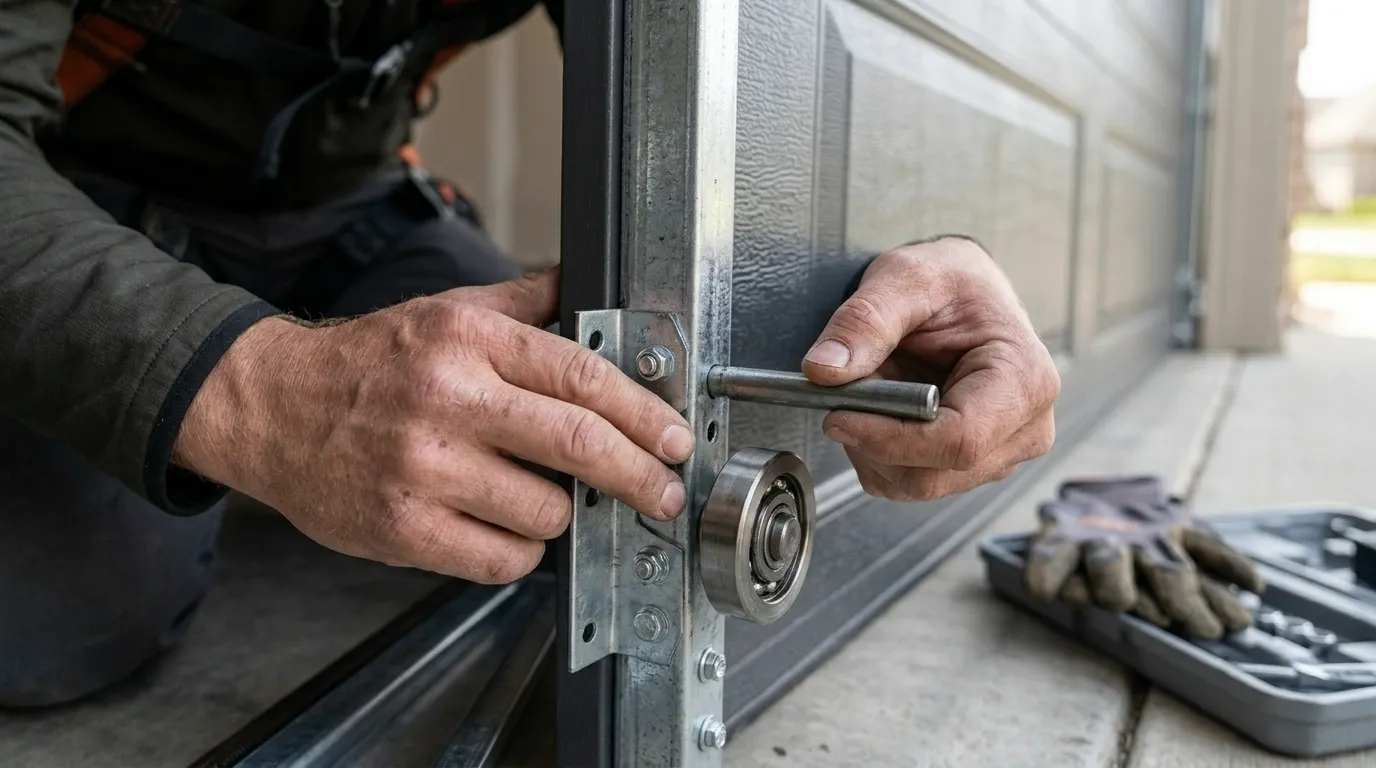
Garage Door Installation
New sectional doors sized and installed for the housing stock actually built in this area.
Learn more →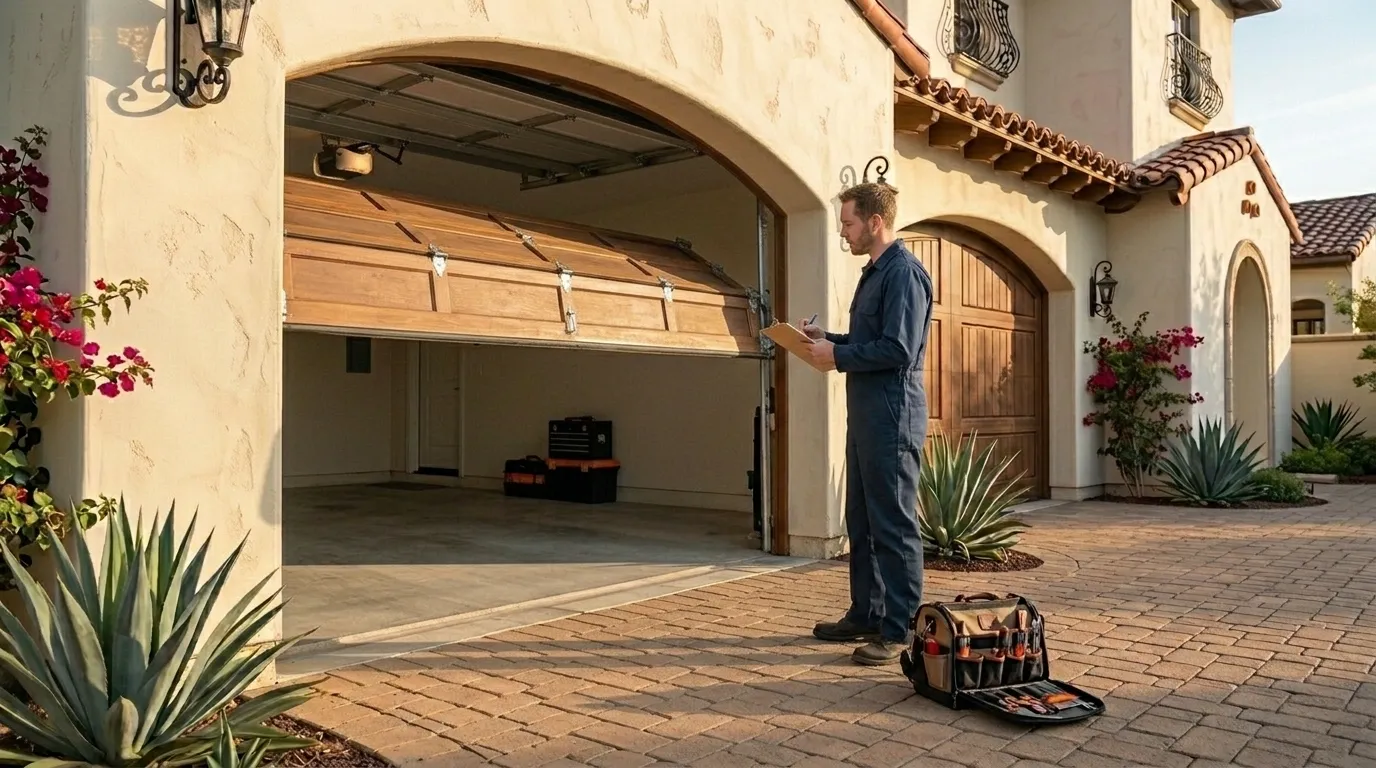
Garage Door Service
Tune-ups, lubrication, and safety checks that catch a small problem before it becomes a service call.
Learn more →Frequently Asked Questions
Can I put the roller back on the track myself?
If the door is fully closed and the opener is unplugged, you can sometimes walk a roller back into a track that's still straight. But if the track shows any bend or the bracket is loose from the jamb, reseating the roller only holds until the next cold morning. We'd rather look at it once than have you doing this every few weeks.
Why does this seem to happen more in winter?
Lenexa's cold moderate climate means real freeze-thaw swings each winter. Stiff grease in the rollers and frost at the bottom seal both add resistance right when the opener is pushing hardest, and that's when a slightly worn roller or loose bracket finally gives way.
Is a bent track always a full replacement?
Not always, but often enough that we check before promising a bend-back repair. Once steel track has kinked, that spot is weaker than the rest of the rail even if you straighten it visually, and on older 1980s-90s hardware common around here, the metal is thinner to begin with.
How do I know if it's the track or the springs?
A track problem usually shows as the door hanging crooked or a roller visibly outside the rail. A spring problem shows as the door feeling heavy, dropping fast, or the opener straining on every cycle. They can happen together on an older door, which is why it's worth having both checked at once.
Have a Door That Needs a Second Opinion?
Call and describe what it is doing - we will tell you what it likely is.