
Lenexa Garage Door Guide
What Actually Happens When We Show Up in Lenexa
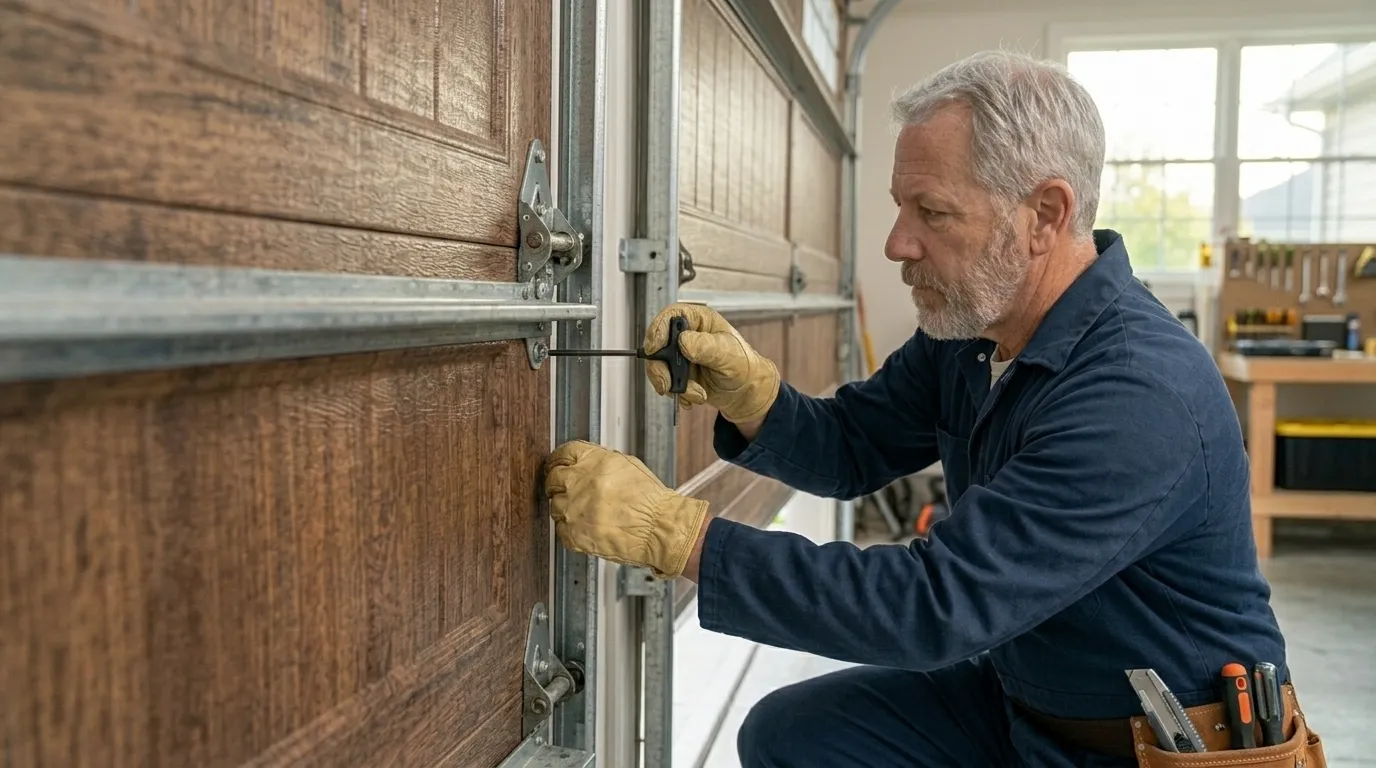
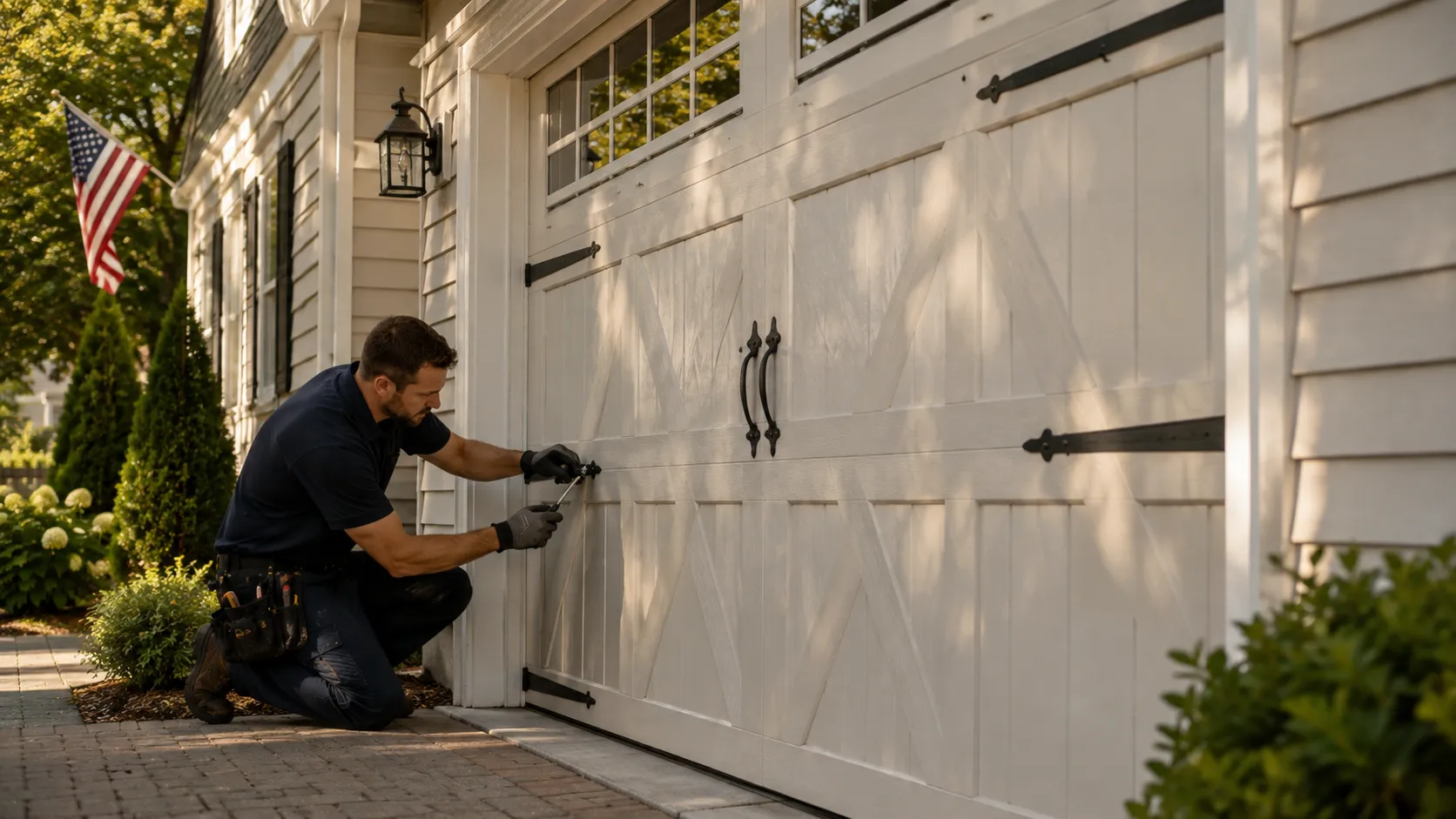
A Lenexa, KS service call covers spring, cable, track, and opener checks tuned to the 1950-2004 housing stock and cold-climate wear common in this area.
- Licensed & Insured
- Same-Area Service Calls
- Upfront Pricing
What the Weather Here Does to It
Lenexa sits in a cold-moderate climate band, which means the steel in your track and the coil in your spring see real freeze-thaw swings every winter, not just a cold morning here and there. Grease that was fine in August turns to paste by January, and a spring that's already tired from age loses tension faster in the cold than it would somewhere warmer. That matters here specifically because most of the houses we get called to sit in the 1950-2004 stretch, with a lot of them going up during the 1980s and 90s across the older subdivisions in this service area.
A door and hardware set installed in that window is now thirty to forty years into a job it was built to do for maybe fifteen to twenty. Cold makes the metal fatigue show up as a sudden snap instead of a slow squeak. On a service call we're looking at how the cable and drum are handling that age under this winter, not just whether the door opens today.
If the springs still have factory paint on them, that alone tells us we're behind on a replacement that should have happened years ago.
When to Get Help
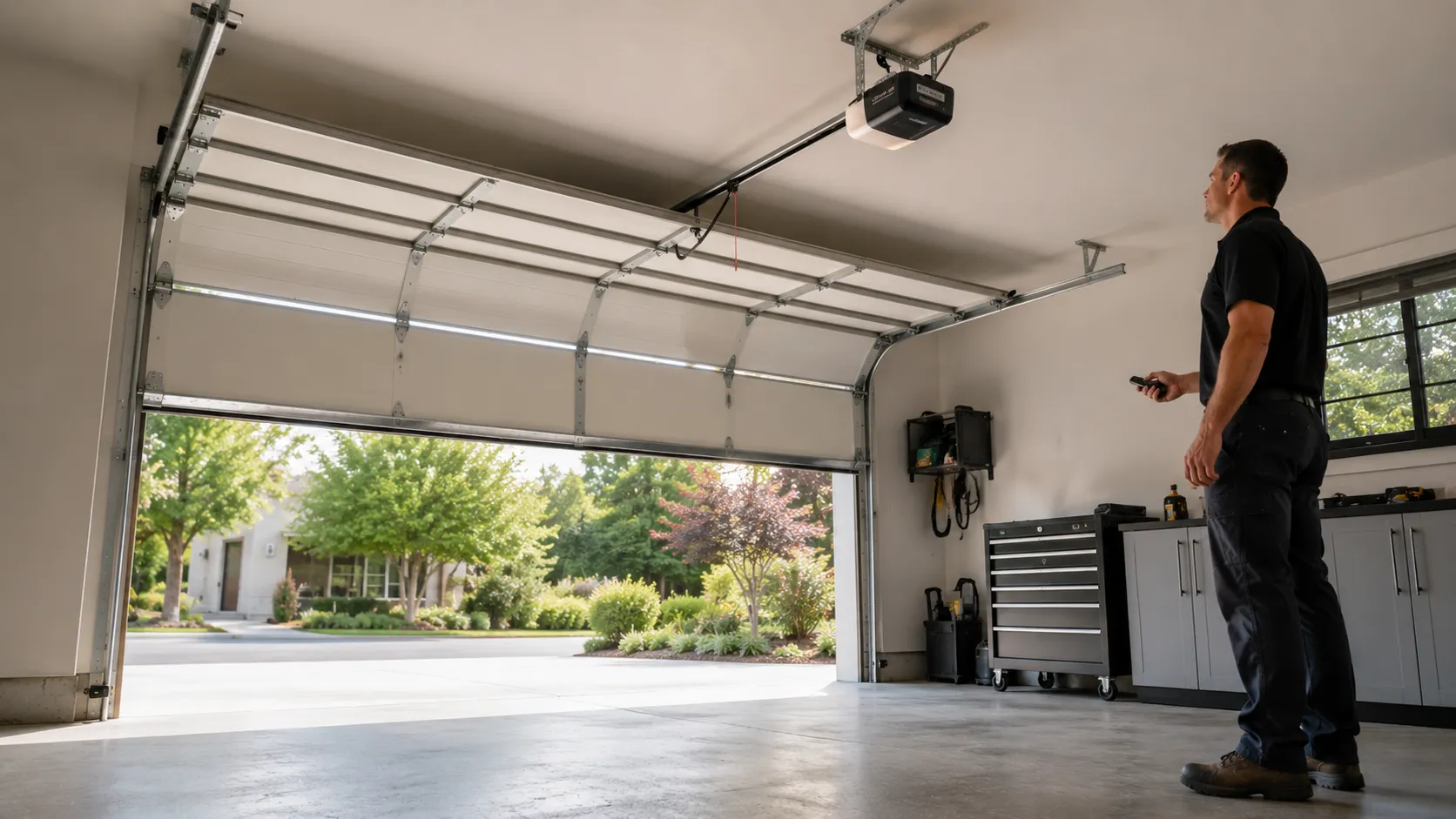
Call before the door won't move, not after. A door that's starting to hang unevenly, a track bracket that's pulled slightly away from the framing, or an opener that grinds for a second before it catches - those are early signs, not emergencies yet, and they're cheaper to fix now than after a full stop. A door installed when this neighborhood went up in the 1980s is now on its third or fourth spring cycle, if it's had any spring replaced at all, and that's the point where a five-minute imbalance turns into a snapped cable pulling a panel off its rollers.
' Slower usually means the spring is losing tension, and a spring under partial tension is more dangerous to be near than one that's either fully wound or fully gone. If you hear a bang from the garage, that's a spring letting go - don't put the door down on it, call first.
The Common Mistake
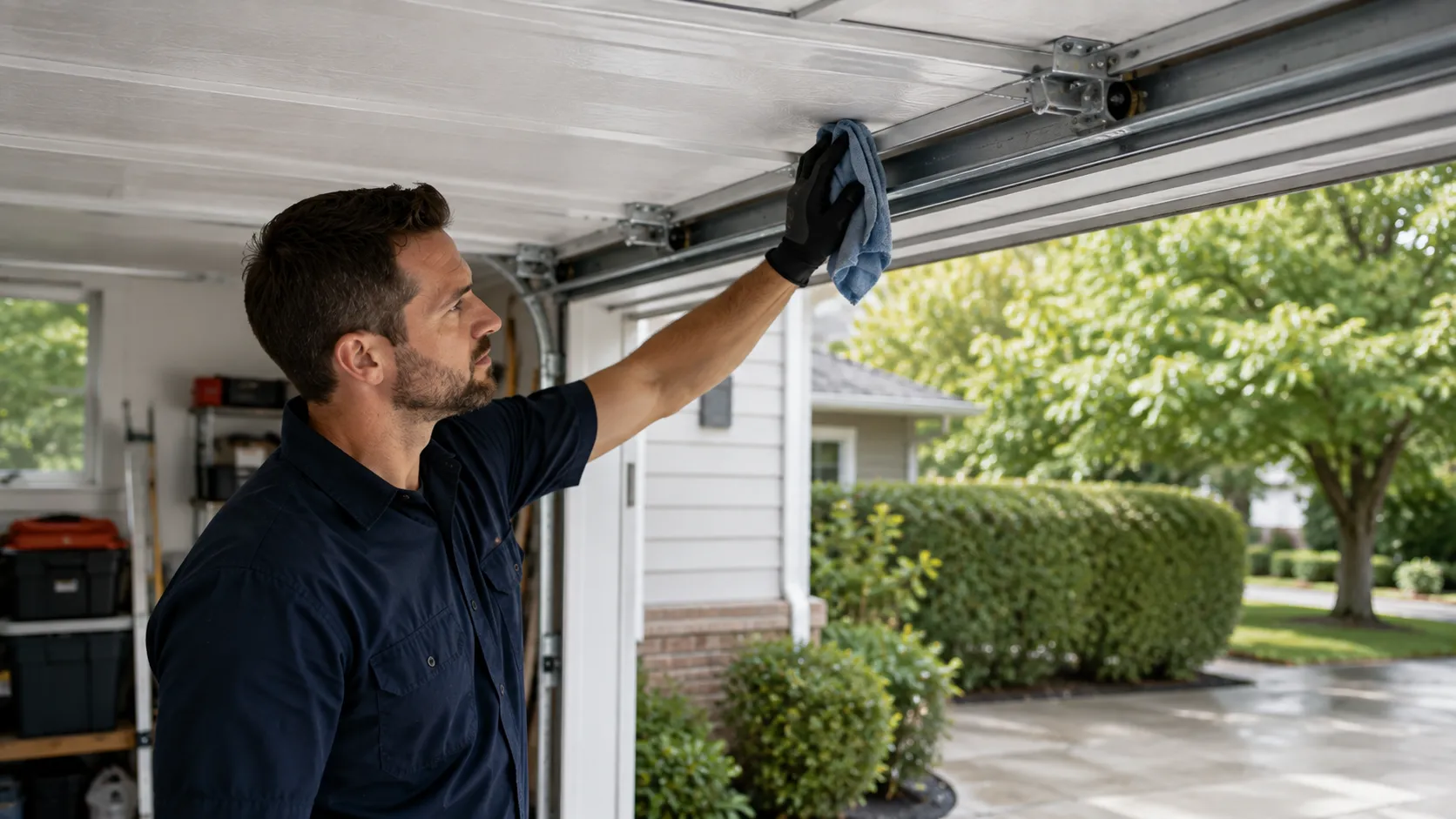
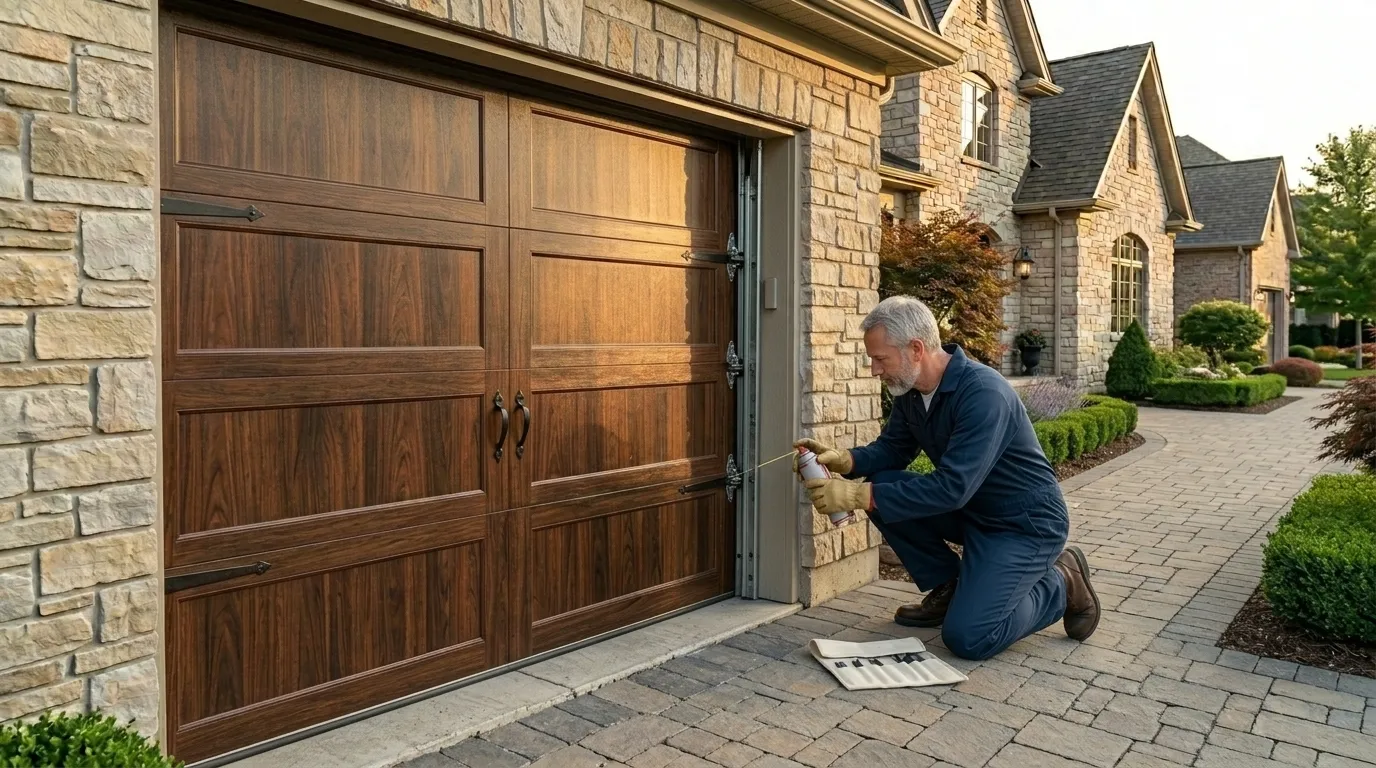
The mistake we see most in this area isn't neglect, it's the opposite: people spray lubricant on rollers and hinges every spring and think that counts as maintenance. It helps, but it doesn't touch the actual failure point on hardware this old, which is the spring and the cable, not the moving parts you can reach with a can of WD-40. Across the roughly 68,070 households in this service area, about 40,274 are owner-occupied, and that's the group we get most of the calls from - homeowners who've done the DIY lubrication for a decade and assumed the door was fine because it still moved.
The median household income here runs $96,725, which is part of why a lot of these calls end in a full opener swap rather than a patch job - people would rather replace the aging unit outright than keep nursing a fifteen-year-old motor along. That's not a bad instinct. It's just not the same thing as catching a spring problem before it becomes a cable problem.
The Problem
' It starts with a door that's heavy to lift by hand, a remote that works sometimes, or a track that knocks when the door passes a certain point. Given how much of this area's housing dates to 1950-2004, the actual problem underneath is usually one of three things: a torsion spring that's outlived its wind count, a cable that's frayed where it wraps the drum, or a track bent from a car bumping it once years ago and never straightened. We check balance, spring tension, cable condition, roller wear, and the opener's force settings, in that order, because fixing the opener on a door that's out of balance just burns out the new opener too.
One honest limit here: if the door itself is warped or the panels are rusted through, we'll tell you replacement beats repair rather than billing you for parts that won't hold. Not every call ends with a fix - sometimes it ends with a straight answer that the door's done.
How We Can Help
Garage Door Repair
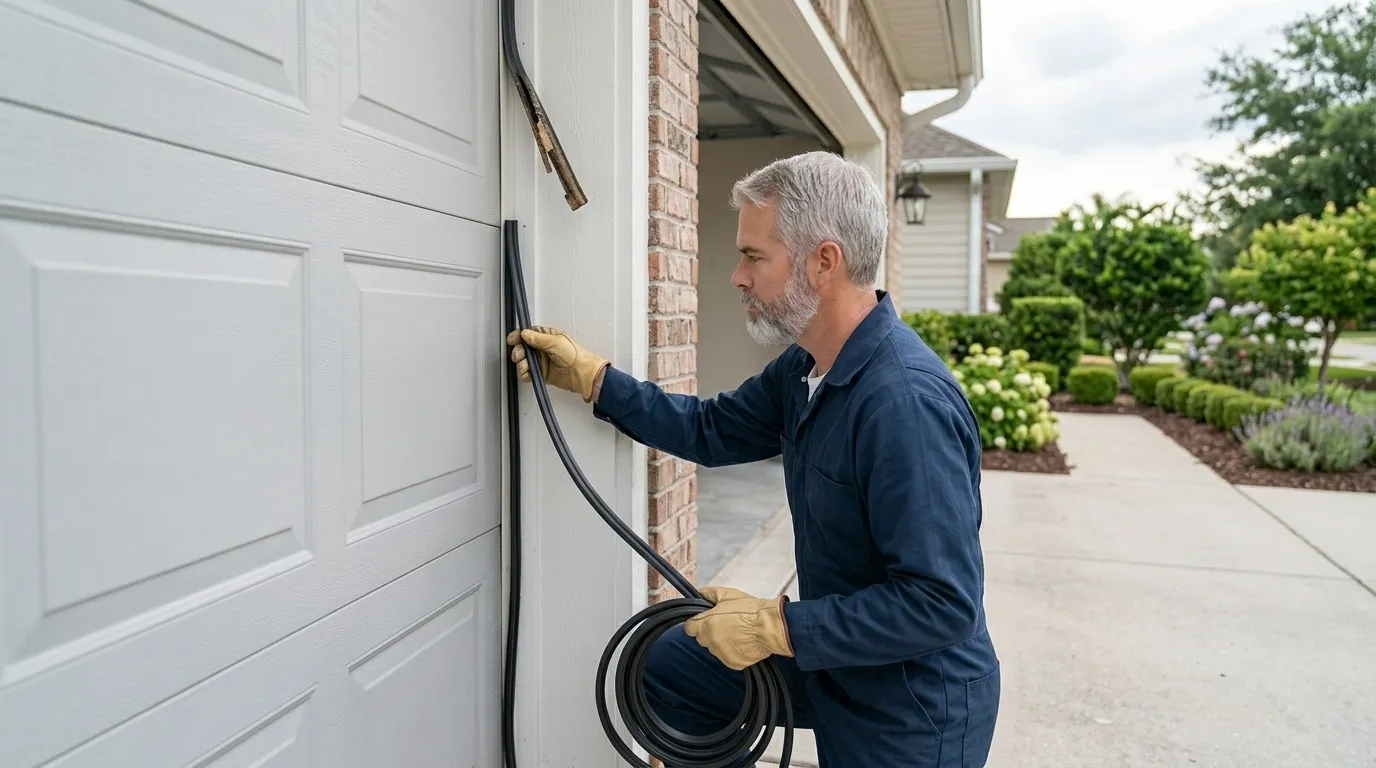
Springs, cables, tracks, rollers, and openers fixed by a tech who explains the problem before touching anything.
Learn more →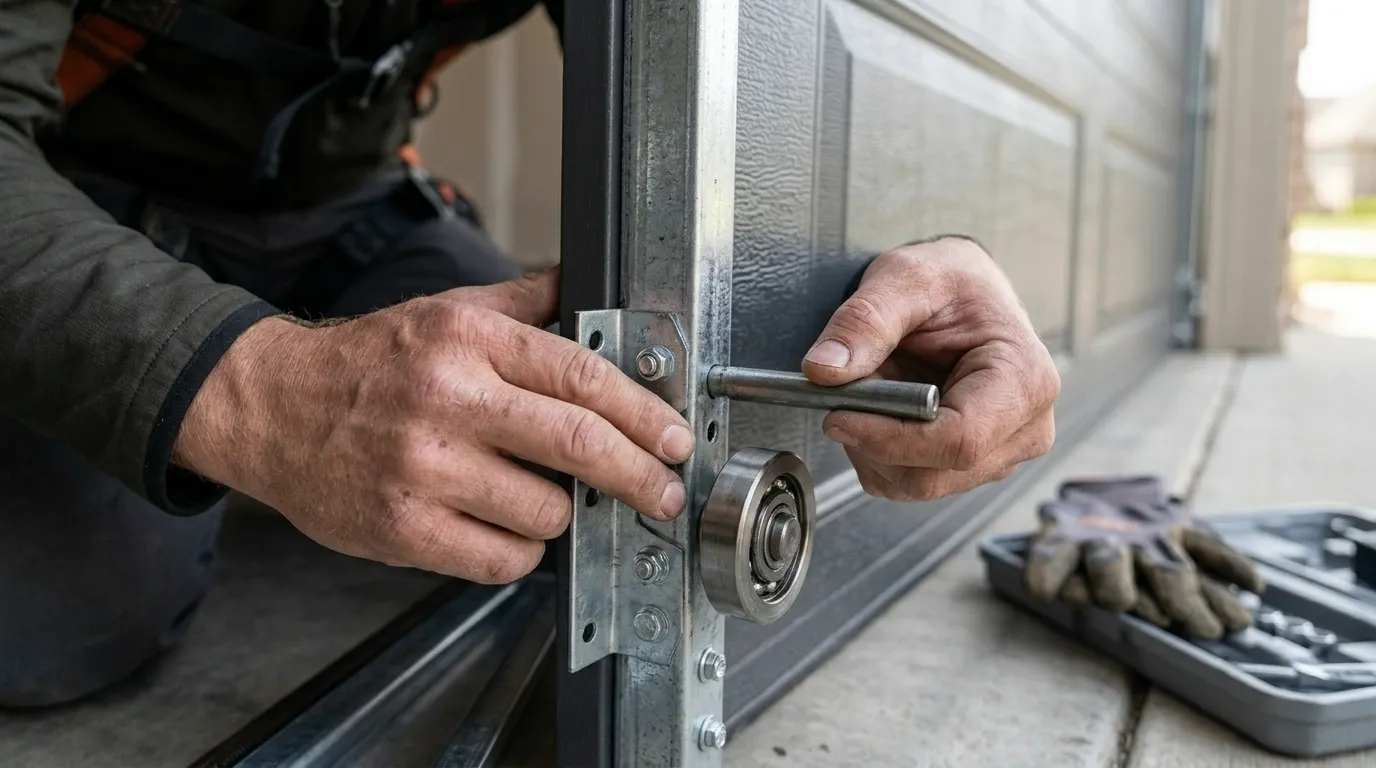
Garage Door Installation
New sectional doors sized and installed for the housing stock actually built in this area.
Learn more →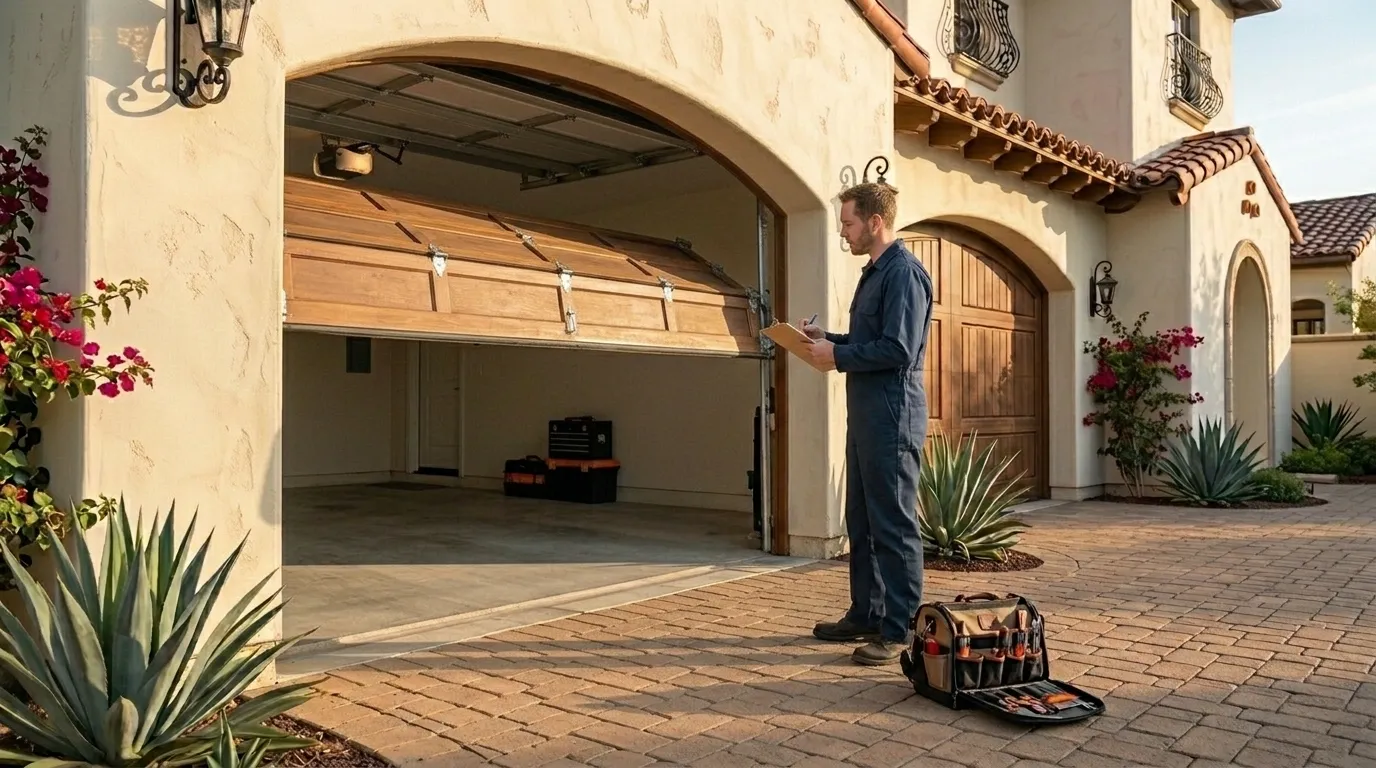
Garage Door Service
Tune-ups, lubrication, and safety checks that catch a small problem before it becomes a service call.
Learn more →Frequently Asked Questions
How old does a garage door spring usually get before it fails around here?
Most of the springs we replace are original to houses built in the 1980s and 90s, which puts them well past a normal service life. Cold winters here accelerate metal fatigue, so a spring that might limp along longer in a milder climate tends to snap sooner in this area.
Do you fix openers or just replace them?
Depends on what's wrong. If it's a sensor, gear, or logic board issue on a unit that's still reasonably young, we repair it. If the motor's original to an older house and already straining, we'll usually say a full swap makes more sense than patching an old unit again.
Why does my door feel heavier in winter?
Cold makes lubricant thicken and metal contract slightly, so a spring that's already under-tensioned has less give. If the door felt fine in summer and heavy now, the spring is telling you it's near the end, not that the season is the problem.
Have a Door That Needs a Second Opinion?
Call and describe what it is doing - we will tell you what it likely is.